Before BPB Wireline started in 1970, the Geophysics and Nucleonics Department had a Field Van, a Logging Van and a Land Rover used for seismic and Mine Probe work.

Field Van
The Field Van was purchased for Surface Geophysics in 1965 for £700, along with geophones and cables.
This was probably a Ford Thames 400E van with electronic and radioactive equipment to the value of approximately £4,000
A blue Ford van was registered 1964 in Nottinghamshire.
In 1967 ARR741B (also a reference to ARR781B typo?) was listed as ‘field van’ with Engine No. L.4D244928E Chassis No. 400E
Shipped to France Monday 30th January 1967, returned Friday 3rd February. At the end of 1971 the location was Coal Board. Not in service by March 1973.
The Ford Thames 400E was produced 1957-1965
No. 1 Logging Van
A Logging Van was purchased November 1967 for £240. It became operational in February 1968, but the new winch had yet to be fitted. Spectral tool tested February 1968.
Extended to have a depth capability of 3,000 ft, cable purchased either January 1968 or April 1968 for £133 (also a reference in August 1968 to 4000 ft of Towing Cable for £133)
It seems No. 1 may have been Ford Van SLT689F. Purchased (transferred?) from BG for £95 on 17th July 1970, sold February 1971 for £91.
First registered December 1967 as Ford, 1996cc petrol, last V5 issued 1982. Ford replaced the Thames 400E with the Transit Mk I in 1965, in which they offered a 1996cc V4 petrol engine.
No. 2
In 1969 a 6,000 ft Land Rover logging unit was constructed for £2,350. Cable 6000 ft purchased 1969 for £177.
1969 Capital expenditure £5,000 Nov 69. A UK logging van cost BPB £894 in 1969. Was this a different unit?
At the end of 1971 the location was Coal Board. Not in service by March 1973
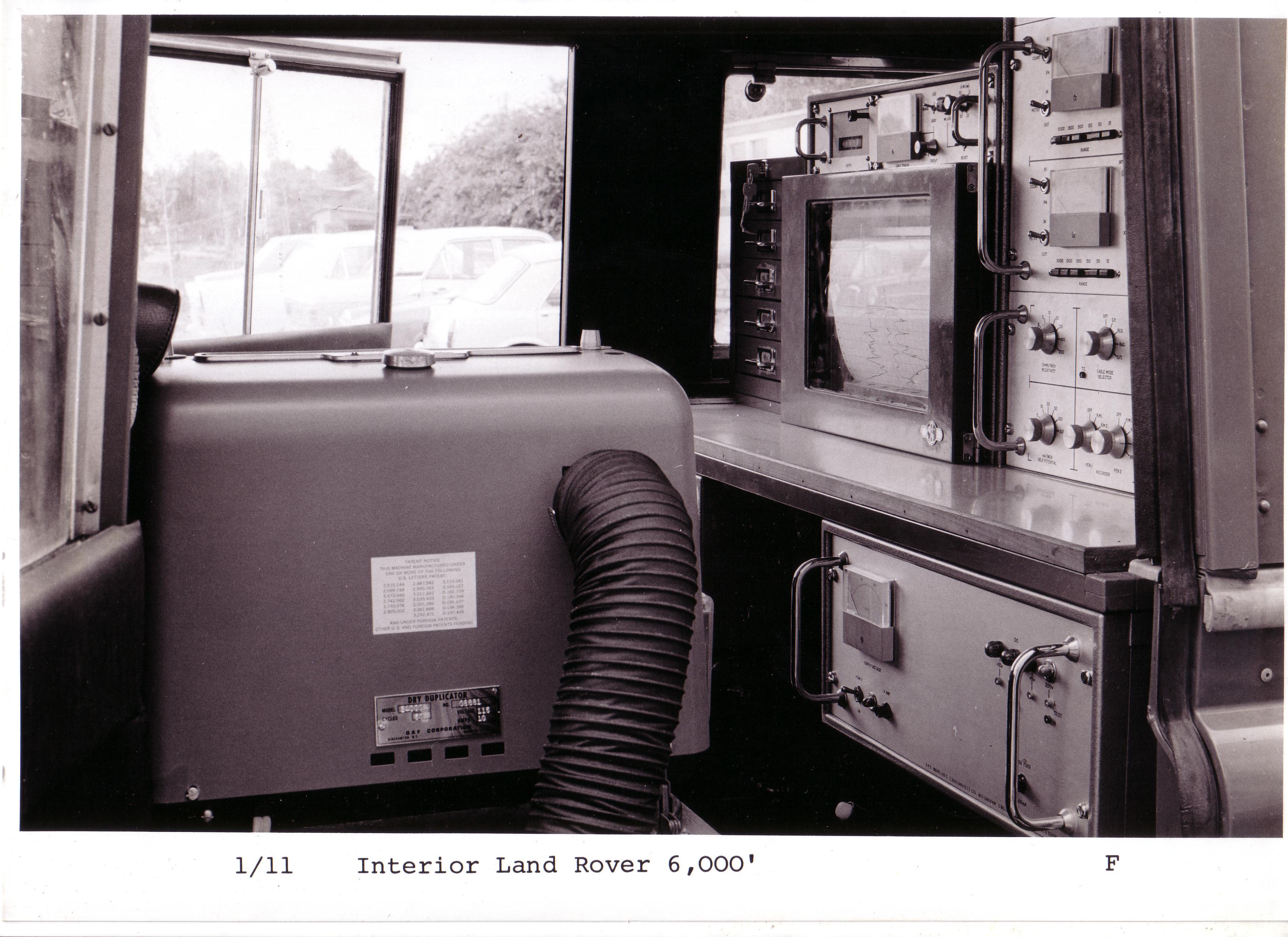
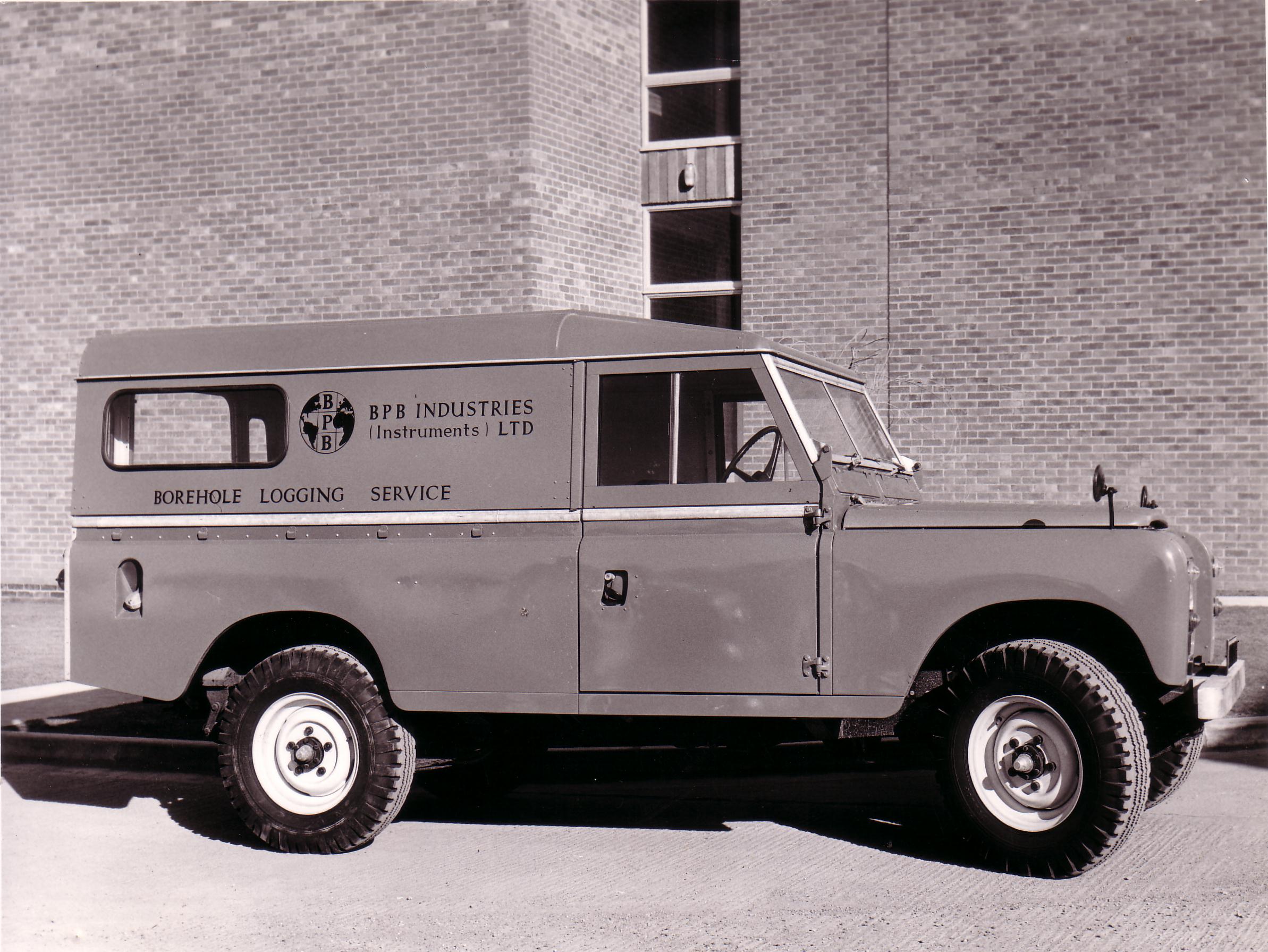
No. 3
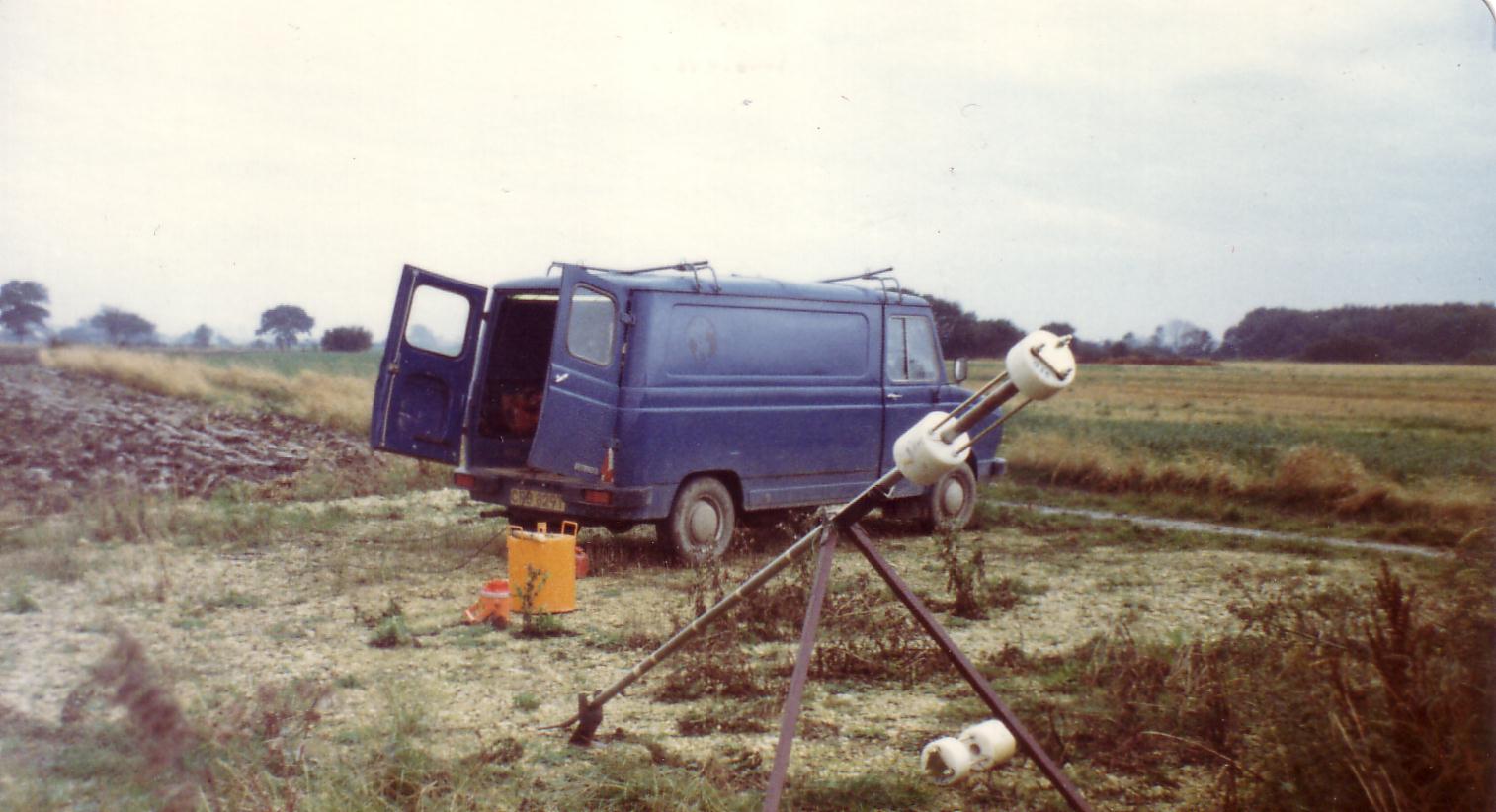
When the company was started on 1st April 1970, British Gypsum included a capital allocation of £3,096 for a van to include 4,000ft of Towing Cable, a neutron source and ‘Nucleonic Equipment’. This Ford Transit WAL288G began operating in the UK in September 1970 and spent six months in Sweden (Gotland Island) from January 1972.
Rebuilt 1973.
Eventually it became so rusty round the rain gutter that the roof almost came off and it was used by Research. Roger Samworth managed to sell it for £100.


No. 3A
Replacement for No. 3, 1974


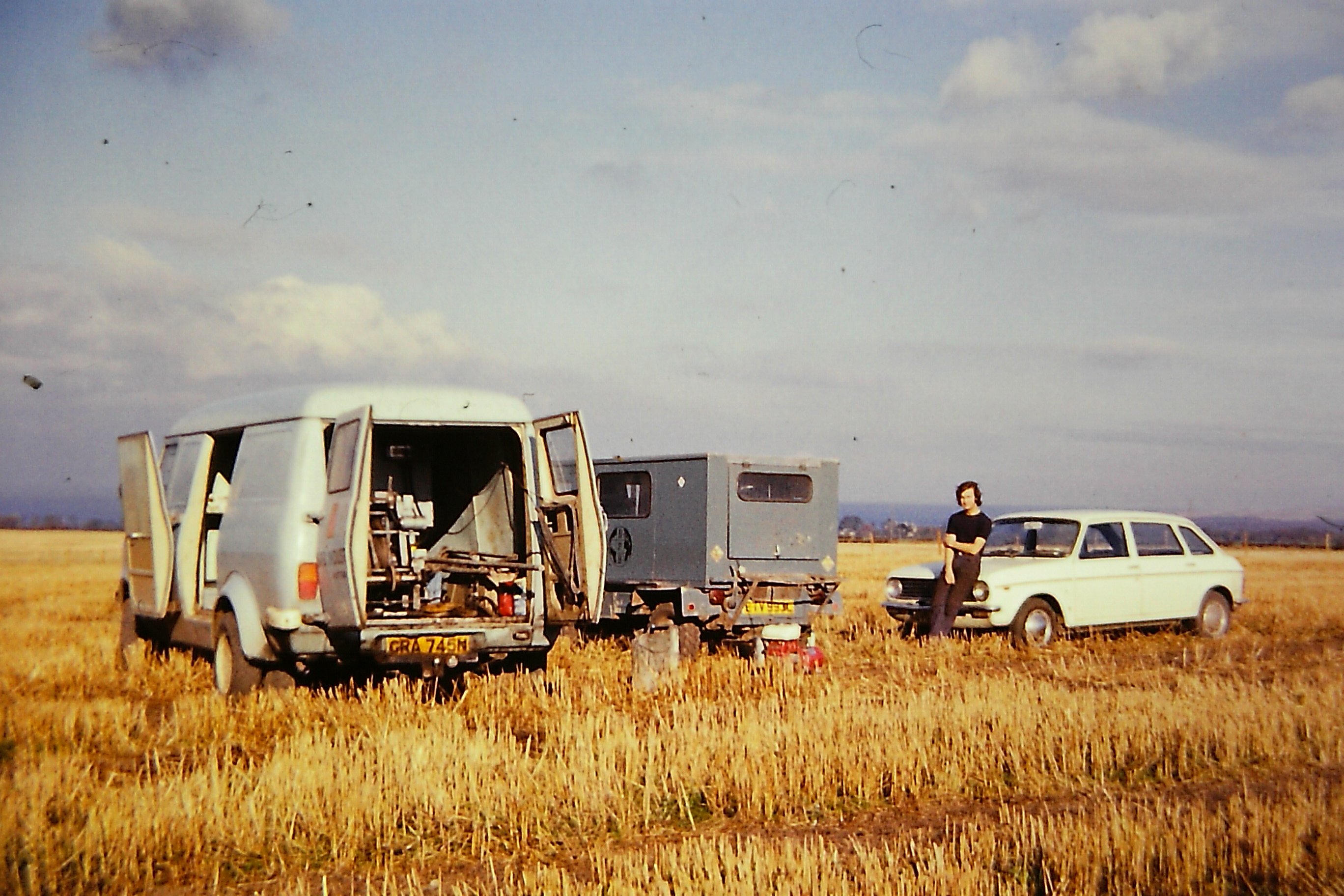
Bedford CF, GRA745N registered November 1974, petrol, last V5 1984
Nick Reade employs some good detective work “I started in Sept 1975, and I never saw that ‘Van 3’ Ford Transit unit – I guess it had rusted away for good by then as you suggest. However, the unit I did go out in at that time as a Trainee with Mick Chaplin on a couple of NCB Deepmines jobs was ‘Van 3A’. It was a Bedford CF van, and putting two & two together it was the replacement vehicle for the original ‘Van 3’.
It had a one-off electric winch in it, which must have been swapped from the old Ford van to the new Bedford van. Although smaller, the A-Type skid winch units were based on this one.”
Other CF vans were No. 10 and No. 24
See also photo of ETV993L
No. 4
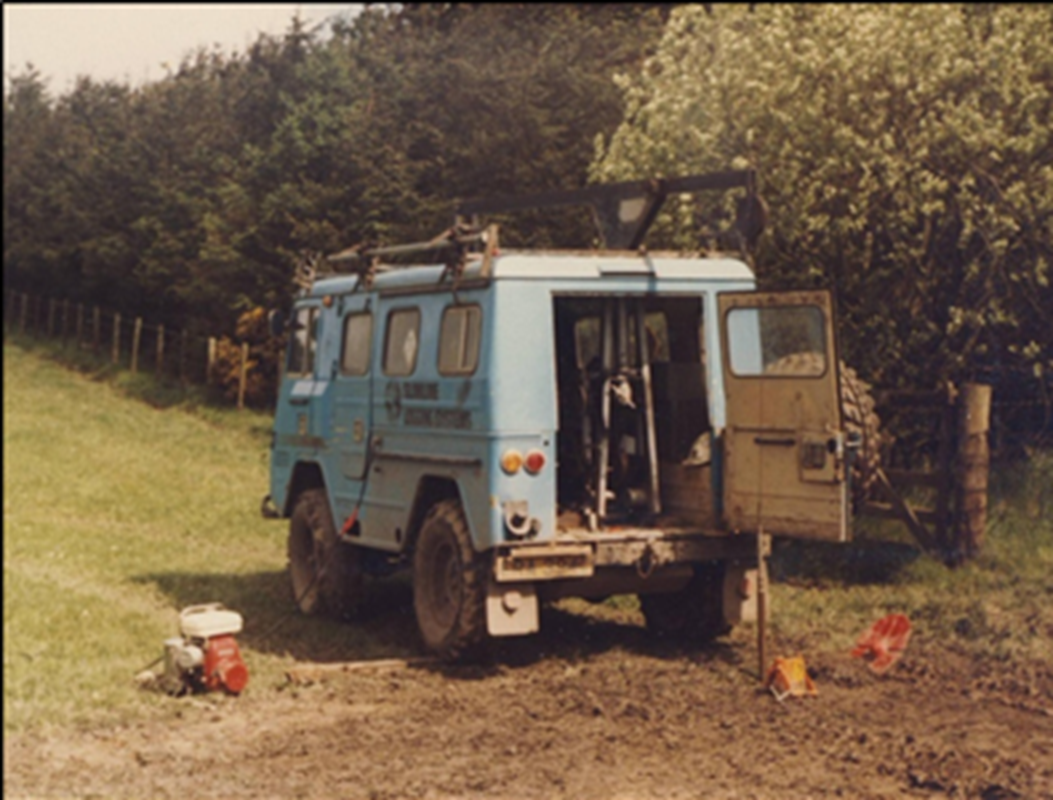
Land Rover, ANN574H
5,250ft Towing Cable with 1-1/8 hp geared motor
Completed April 1970 and in Canada the same month. At the end of 1971 the location was Canada (first Canadian unit)
Canada 4

At the end of 1972 one of the Canadian units (Land Rover No. 4?) had been converted to a North American truck, could this be that unit?
However, this is a GMC C/K model of 1973?
No. 5
“Fourth operating unit” Land Rover, authority requested April 1970 for £4,000, started May 70, despatched to Canada January 1971
Intended to replace No. 2 in UK?
27th May 1970 “will have completed in September a new 6000 ft Land Rover, not yet committed” Considered for Iran.
Electric winch fitted Calgary May 1971
March 1972 DRR “No. 5 is the best Logging Unit we have manufactured” due to lightweight simplicity – location Canada (second Canadian unit)
Canada 5

No. 6
Land Rover XCY56J built for Australia, £6,500 authorised 18th September 1970, chassis delivered December 1970. Anticipated finish (as of March 1971) in June 1971. Millington awarded overtime bonus
Sent to Canada June 1971 indications £7,500-8,000 ea. Shipped with No. 7 on “Hope Isle” 24th June 1971 to Montreal arrived 7th July 1971. Arrived Swift Current 23 July 1971.
Despatched to Canada 25th July 71 as Canadian third unit. 18th February 1972, capitalised at £10,000. “Has been transferred” December 1972
Sent from Canada to Australia in February 1973. Freight cost £614, duty cost £1,424.
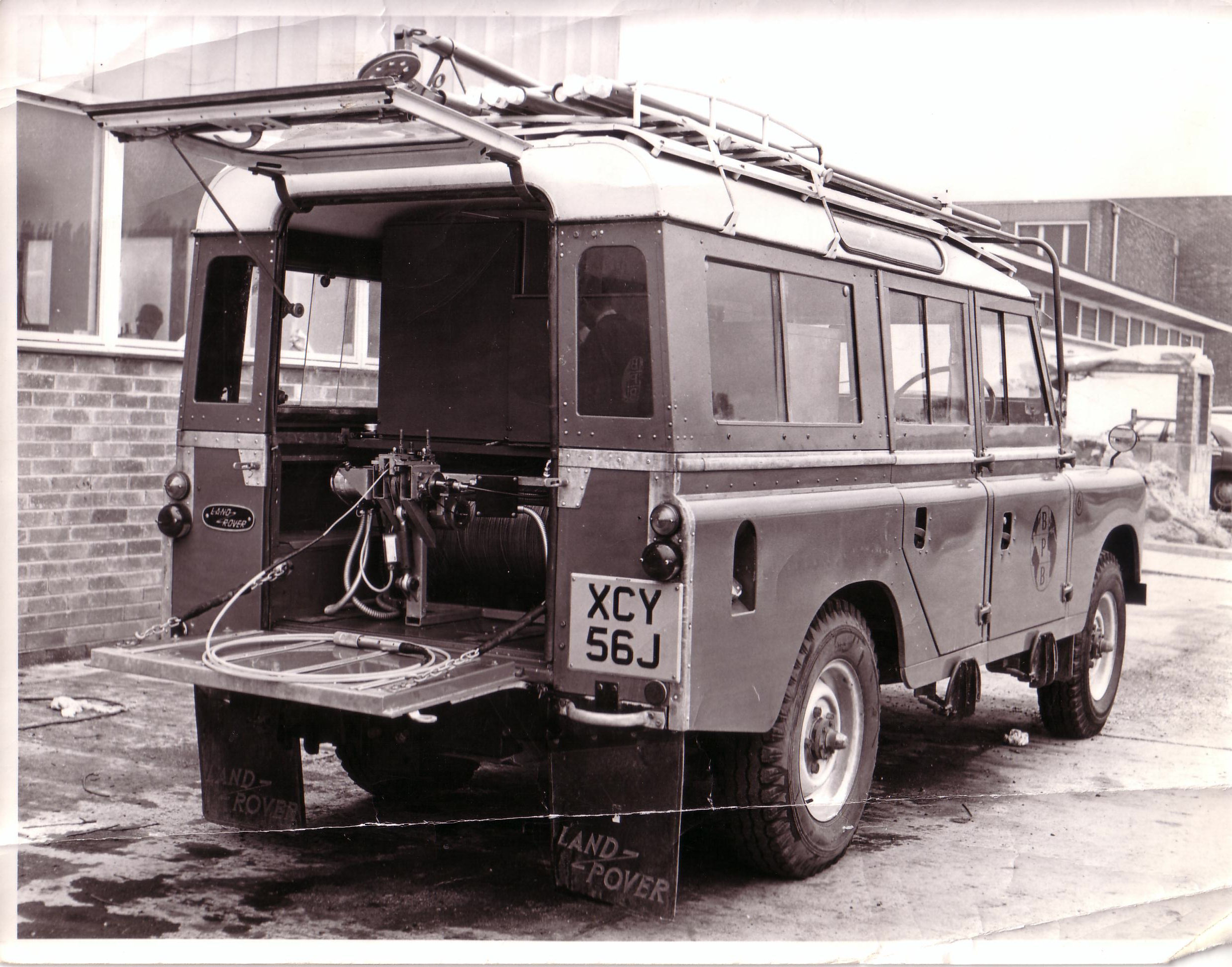

No. 7
Land Rover built for Australia, £6,500 authorised 18th September 1970, chassis delivered December 1970. Anticipated finish (as of March 1971) in June 1971. Millington awarded overtime bonus.
Intended for Australia but Saskatchewan work required this in Canada with No. 6. Shipped on “Hope Isle” 24th June 1971 with No. 6
18th February 1972, capitalised at £10,000
DRR thought of sending from Canada to Australia in January 1973 for QLD work but sent No. 6 instead. DRR continues to refer to No. 7 in Aus even though it is No. 6.
Sent to Indonesia in February 1974 with highest priority
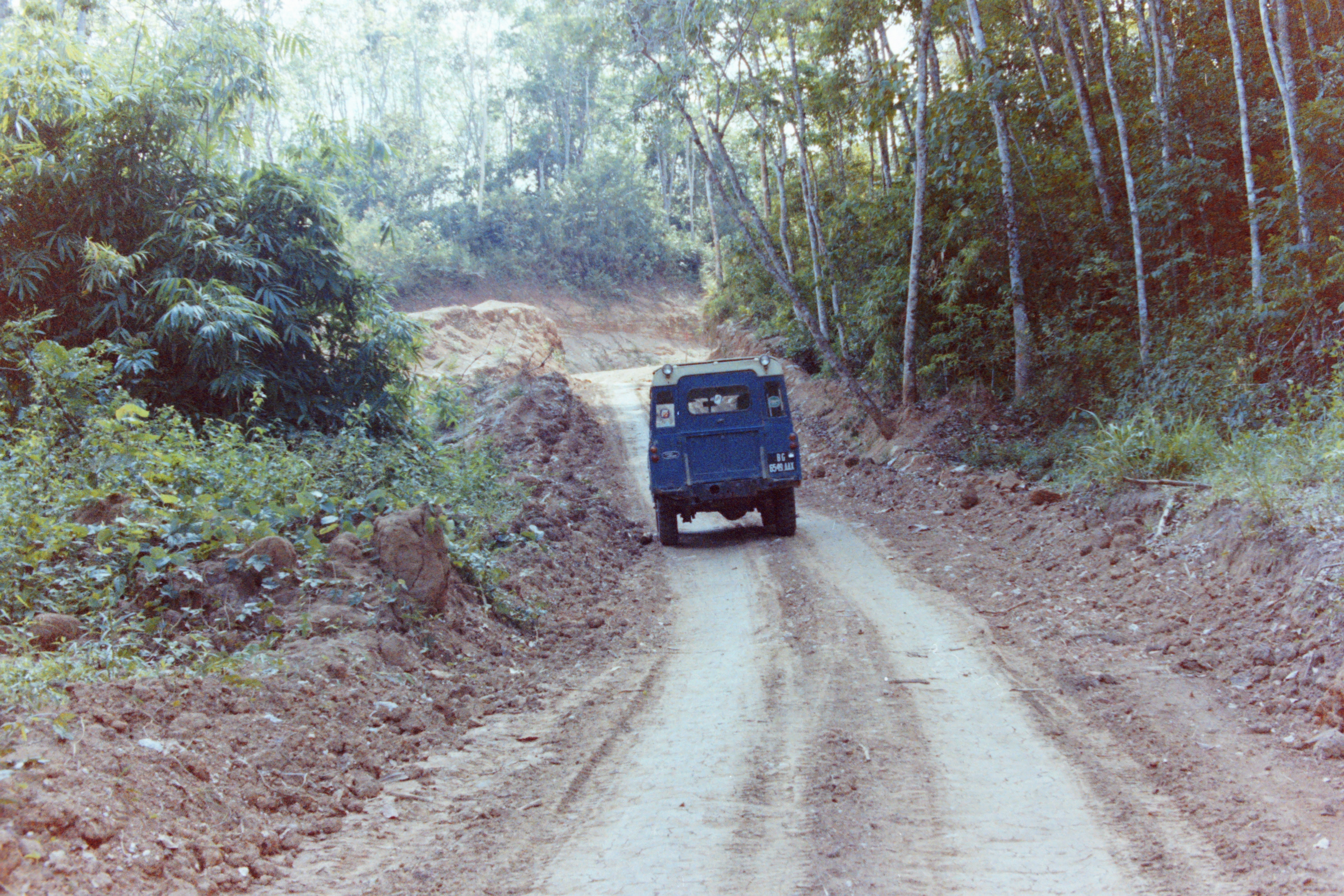
Craig Robinson “I think unit 7, used as a crew bus, later rolled.”
No. 8 “S1”
Progress being made March 1971, anticipated finish in June 1971 but slipped to August
Despatched to Australia 28th August 1971, arrived September but still in customs Sydney. Operational in Aus by December 1971 with Ian H Edwards, first recorded job as “S1” 10th December 1971
18th February 1972, capitalised at £10,000
No. 9
Land Rover. Started September 1971. October 1971 expected December, completed and under test in UK. Finished January 1972. In UK ops March 1972
Used for Opencast NCB demo January 1972 with CCFW in Northumberland, Walney B.G.2
With Stuart Baker (JSB) at NCB Rugeley, Pipe Lane Borehole, the cable parted on 18th July 1972. The logging was completed by venerable No. 3. on 20th July 1972 by MAC.
Hydraulic winch with small pulley system.
Intended for Aus (No. 10 instead) but then assigned to Sweden. As of 5 January 1972, due for despatch to Sweden 18th January 1972 (?too late for contract, sent No. 3?) Commissioned January 1972
No. 10
Started September 1971. As of October 1971 expected January 1972, then February 1972, March 1972. Finally completed July 1972 and undergoing tests. As of 5 January 1972, due for despatch to Aus February 1972
Nick Reade “Unit 10 was also a Bedford CF van, similar to 3A. I have no recollection of it being in Australia at any time… but I do remember using it on UK Deepmines jobs (in 1978/9 perhaps?)…
An unpopular unit to work with as it had a hydraulic driven winch in it – nowhere near as easy to control as the electric winches and easy to snap the usual 0.144″ target towing cable… I only ever used the one in Van 10, but I believe the hydraulic winches were also to be found in the very early Land Rover units too – all overseas by the time I started. Replaced by the A-type winches – which was sized to fit exactly inside the back of the Long Wheelbase Land Rovers.”
No. 11
Capital spent December 1971. 26 January 1972 “to be put into operation this Spring”. Reduced depth capability as not usually required in the field, attempt to lighten and reduce cost. Must still be able to carry out coal work. Smaller winch (electric, utilising as much of the hydraulic parts as possible), 3000 ft cable, normally expected to operate only to 2000 ft. Stainless steel drum. Follow on from No. 5 developments.
December 1971 a new vehicle was purchased for £698 to replace existing van No. 1, could this refer to No. 11 or 12?
16 March 1972 due to start in April. As of 5 January 1972, due for despatch to Can March 1972.
Land Rover cost £1,450, all up price including sondes £7,299
South Africa 1972/73 Freight cost £574, Duty £639.
Nick Reade c.1975/6 “Blue #11 was also out there somewhere – Botswana perhaps – but I only saw it empty as a runaround.”
No. 12
Capital spent December 1971
As of 5 January 1972, part material purchased (same for No. 13). Not in service by March 1973

Land Rover PRR580L, registered 1972/73 (see ETV993L)
LKP993W

LKP993W first registered August 1980, 2286cc petrol, last V5 2012
Unit number?
NAU27W

NAU27W Land Rover. First registered January 1981, 3528cc petrol, last V5 1983. Lighter colour blue?
Unit number?
F89FRM

Land Rover, 3528cc petrol. First registered October 1988, last V5 2013
Unit number? See also D601UAU
ETV993L

Steyr-Daimler-Puch Haflinger, first registered March 1973, last V5 1981
Unit number?
HNU481V

Steyr-Daimler-Puch Pinzgauer 4×4 first registered February 1980, last V5 2002
Unit number? V1002 also in this photo.
Sherpa
Austin Morris Sherpa 1700cc, CRB829T first registered March 1979, last V5 1996
Nick Reade “The Sherpa van was first purchased to be the Seismic truck to carry all the SRS kit around. Only later when a bigger SRS truck was needed was it handed over to Physics.”
Ian Tomlinson “I also remember a Sherpa van that was used for test logging at Sherburn and Kingston where I got a cracking electric shock off it when testing the old mineral FE tools with Rosie. I think it was just a long cable back to the surface system…”
No. 13
Unallocated as of July 1973 – possibly Australia but probably SAF
Nick Reade “In South Africa when I was there we had a green Land Rover, and I’m pretty sure it was V13. When I got there in Nov 75 they were just starting to swap these older Land Rovers for new Ford F250’s. Really liked those. We kept a couple of L/R’s empty for a while to use as runarounds and for shift changes – to/from ops in camps in Botswana for instance.”
No. 16
Blue Land Rover in SAF, see No. 19
No. 17
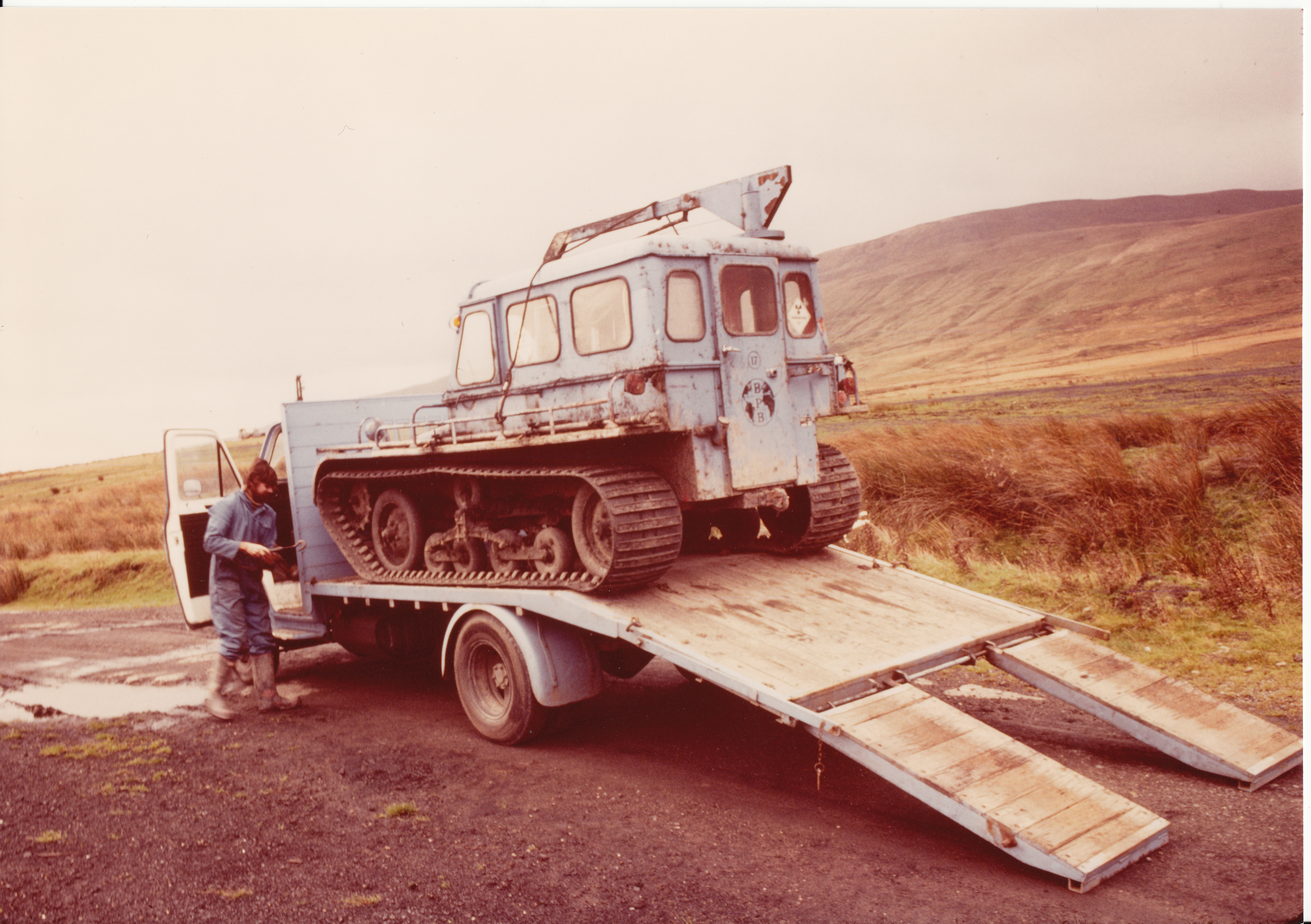

David Firth: “I think the photo is of the original Snow Trac, V17, which I had in South Wales in the late 1970s. It has the narrow cab (later ones were full width) and no roof mounted sonde racks. In the summer I used to open the sun-roof, set the hand throttle, sit on the roof and steer with my feet. Great fun!!”
No. 19

Nick Reade “Your foto shows a logger outside the Holiday Inn at Ermelo, Eastern Transvaal. Lots of work for Shell Coal in the area so we had a room or two there for several months at a time.
The blue L/R unit pictured was probably #19, but blue #16 was in SAF at that time too.”
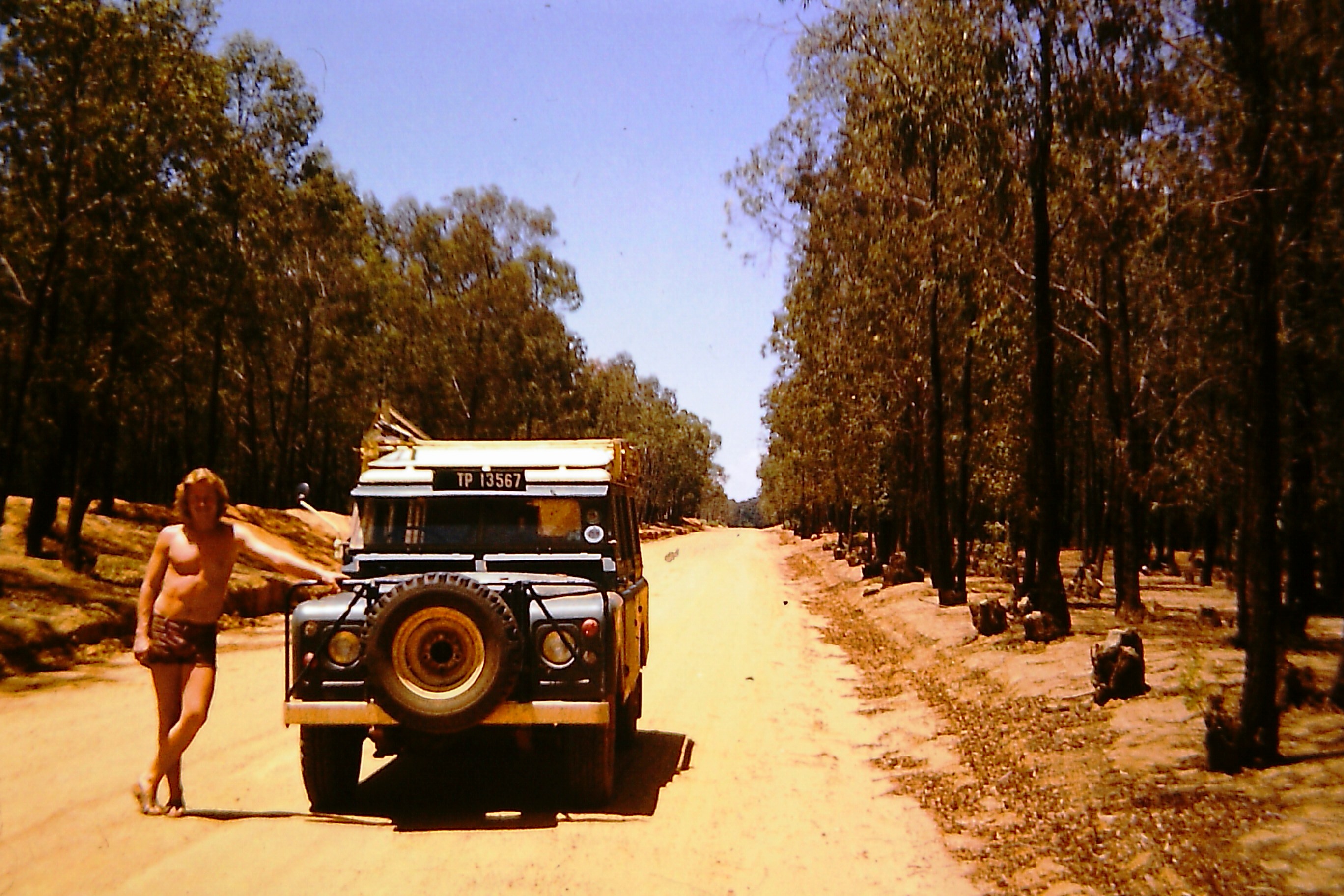

“A couple of late 1975 snaps of V19 (probably) with Peter Haile in Eastern Transvaal.”
Nick also remembers what was probably a blue Land Rover that everyone referred to as ‘JVO’. “That must be part of its previous UK number plate. When in SAF it would have had a ‘TP…..’ plate on it (Transvaal Pretoria). Some of those L/R’s had 4-cylinder engines, some had 6-cylinder.”
No. 24

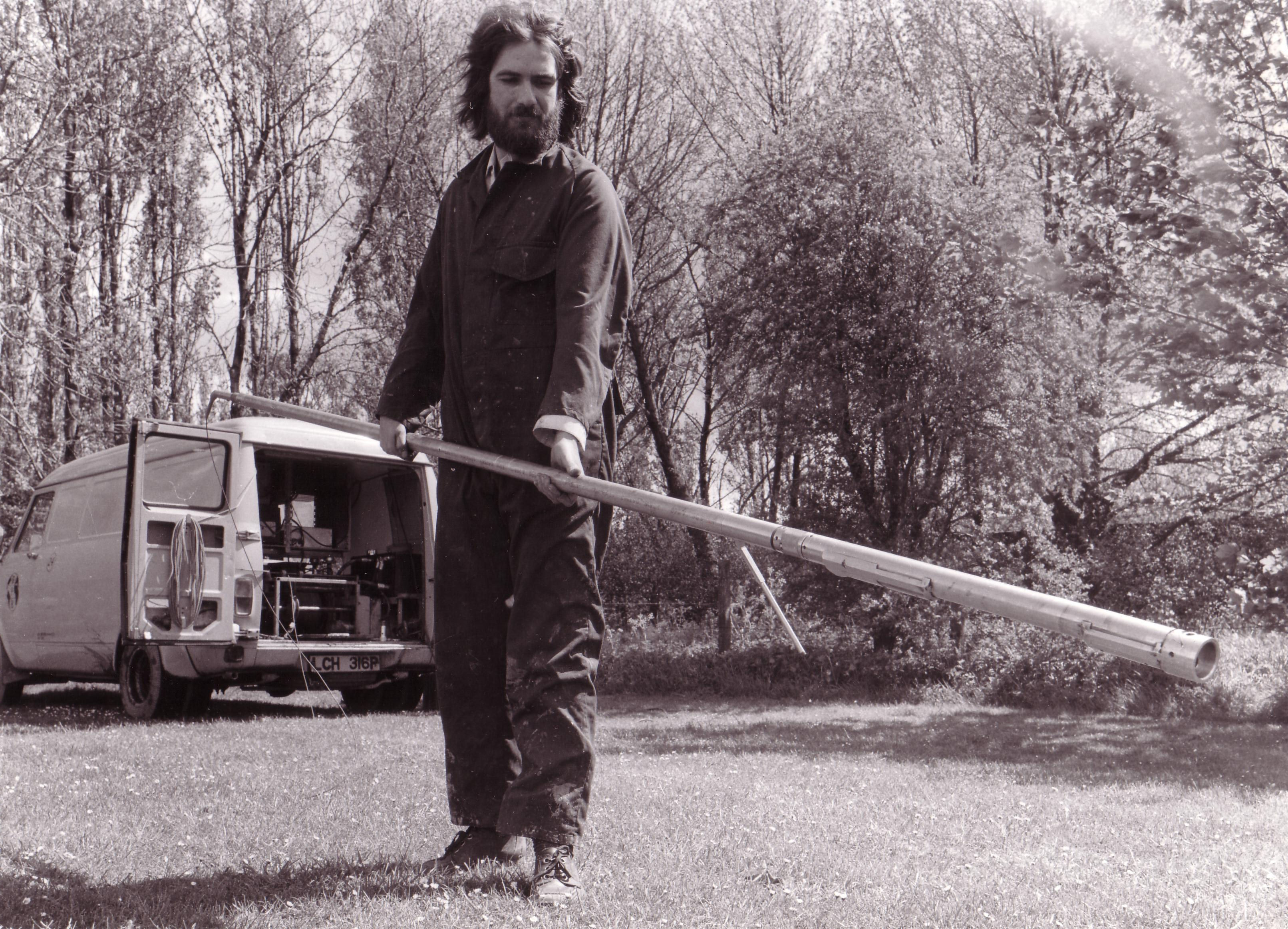
Bedford CF LCH316P first registered September 1975, registered as brown, 2279cc petrol, last V5 1983
Like No. 3A but no side door?
Nick Reade “Unit 24 was another Bedford CF van, but this one was left-hand drive – which explains your confusion about the missing side door – there was one but on the other side! It was purchased for our new ops set-up in Germany – I’m sure it got there at some time but it was used in UK too.”
No. 44
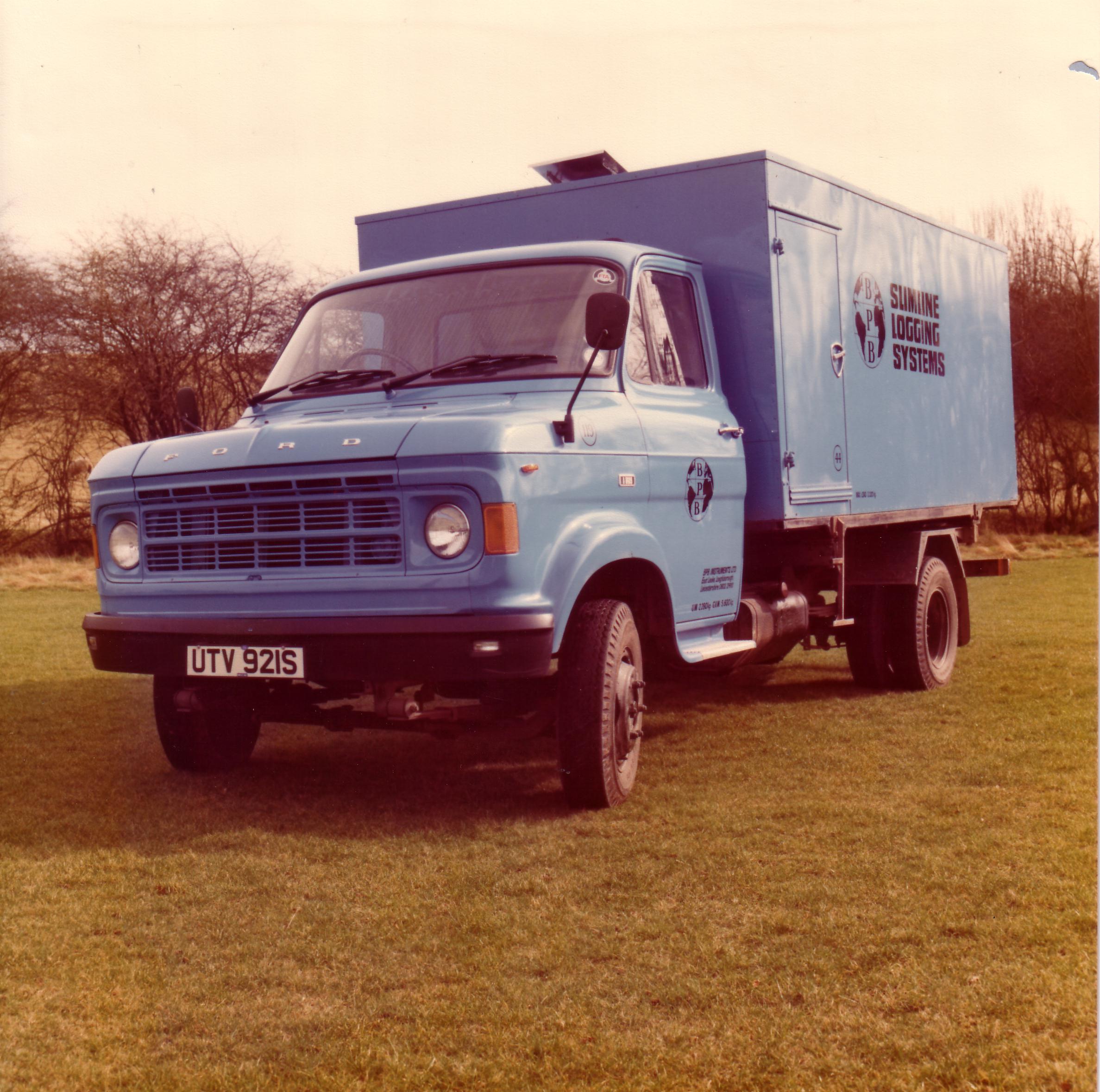
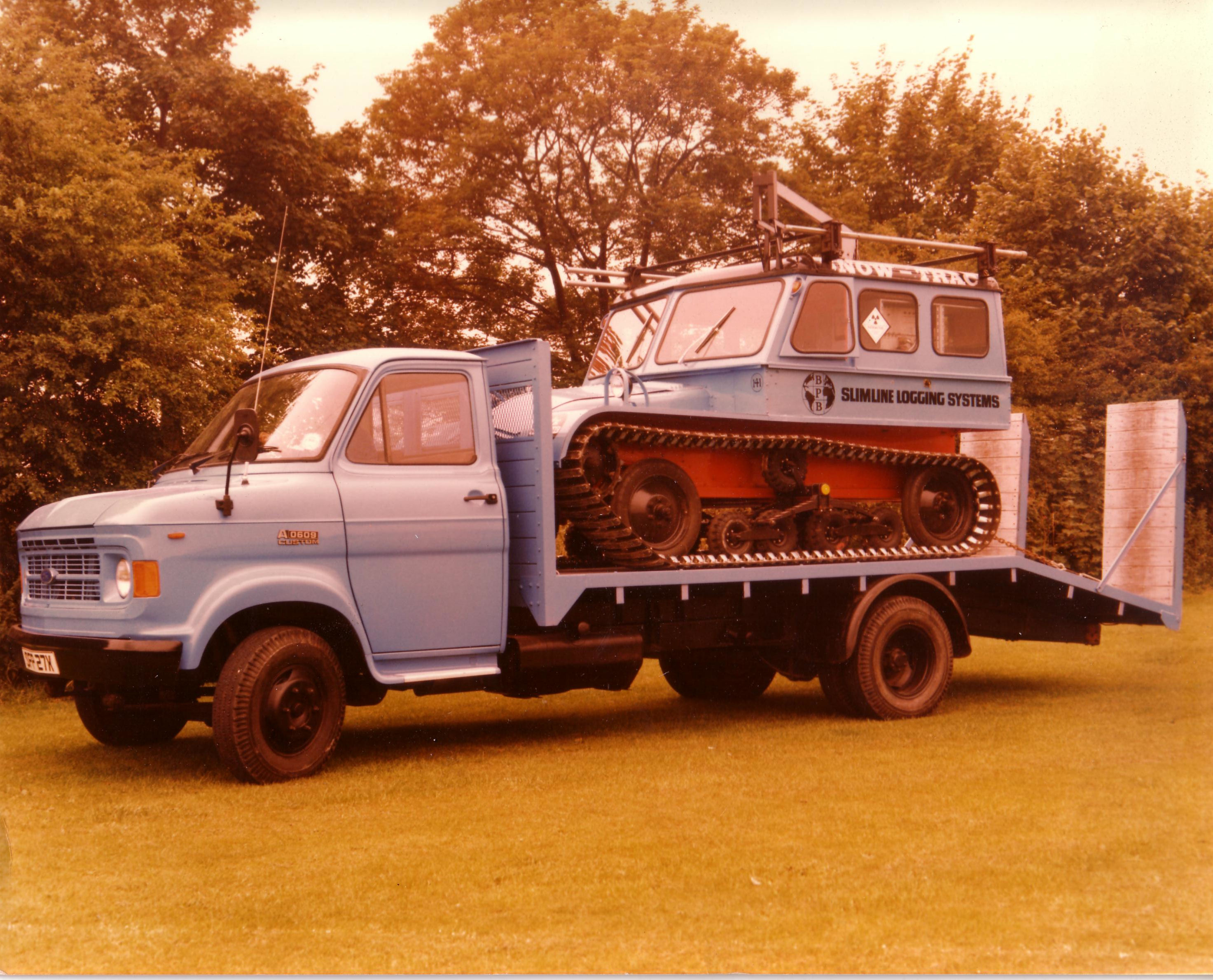
Unit No. 44 on vehicle No. 119 Ford UTV921S, 1977/78
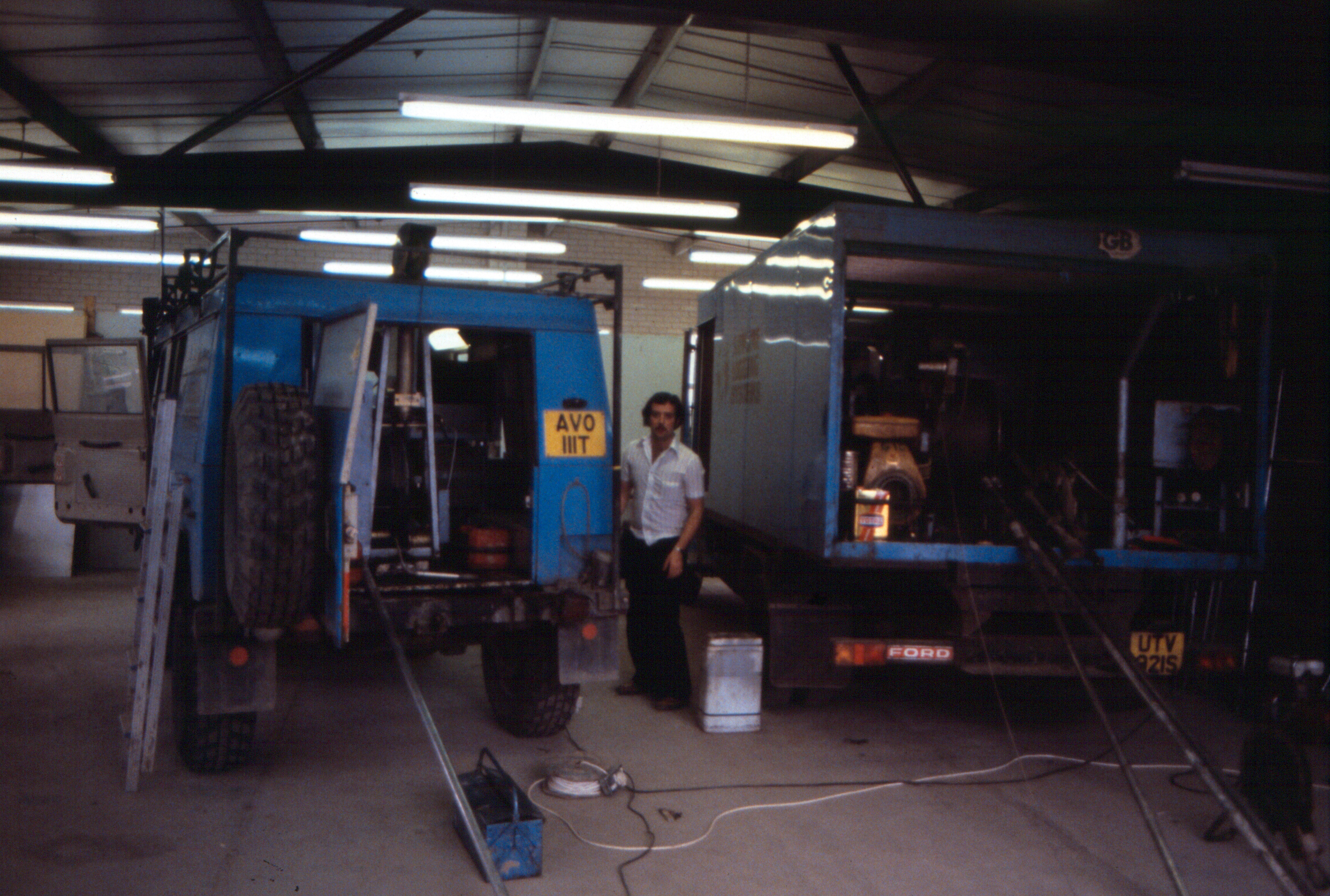
Nick Reade “Ford A0609 trucks. You’ve got two pictured – one as a ‘beavertail’ to transport a Snow Trac; another as our UK Deepmines logging unit. Was it actually the same truck, before & after conversion? Or did we have two? I have distant memories of both possibilities!”
No. 119
See No. 44
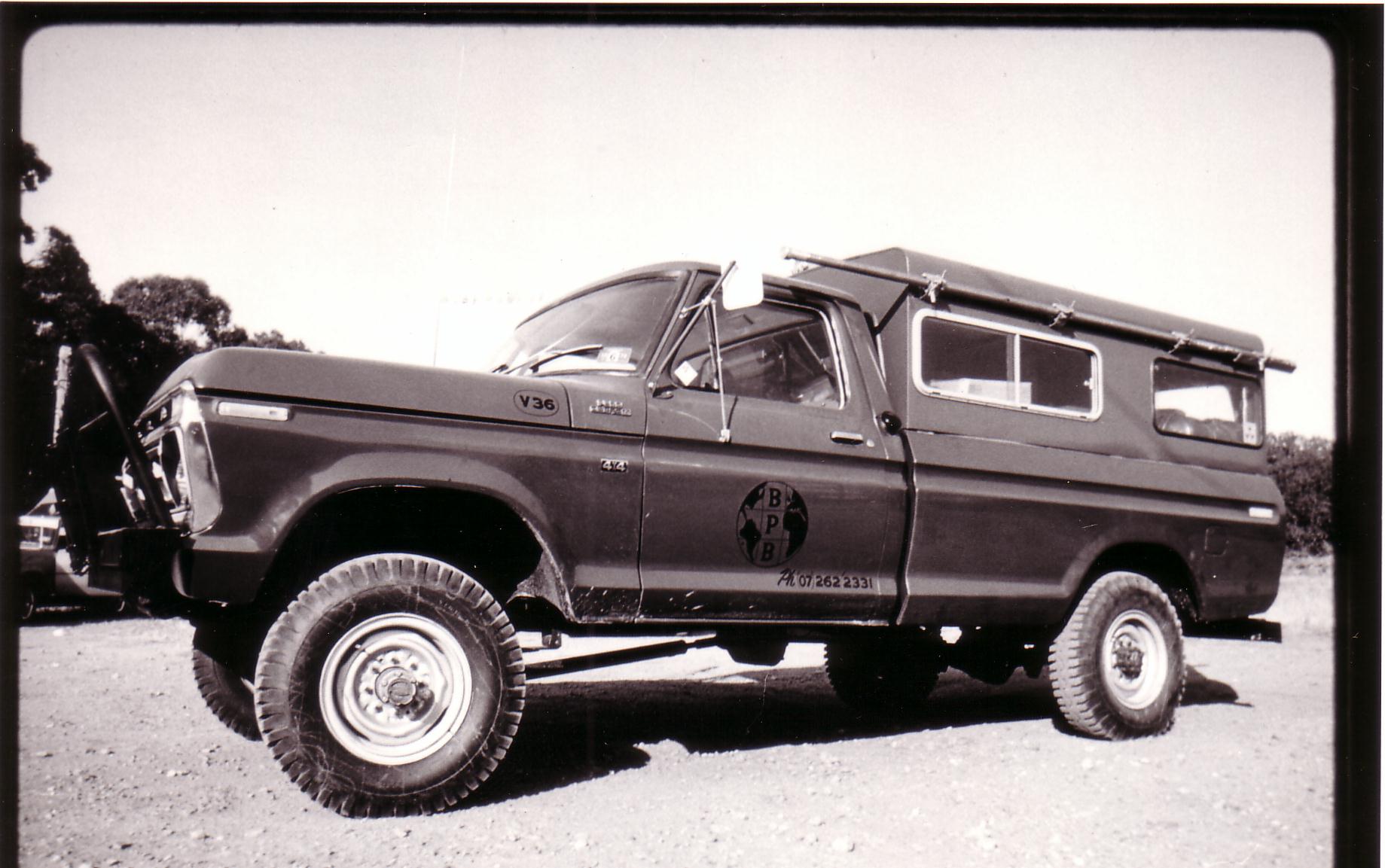
V36
V37
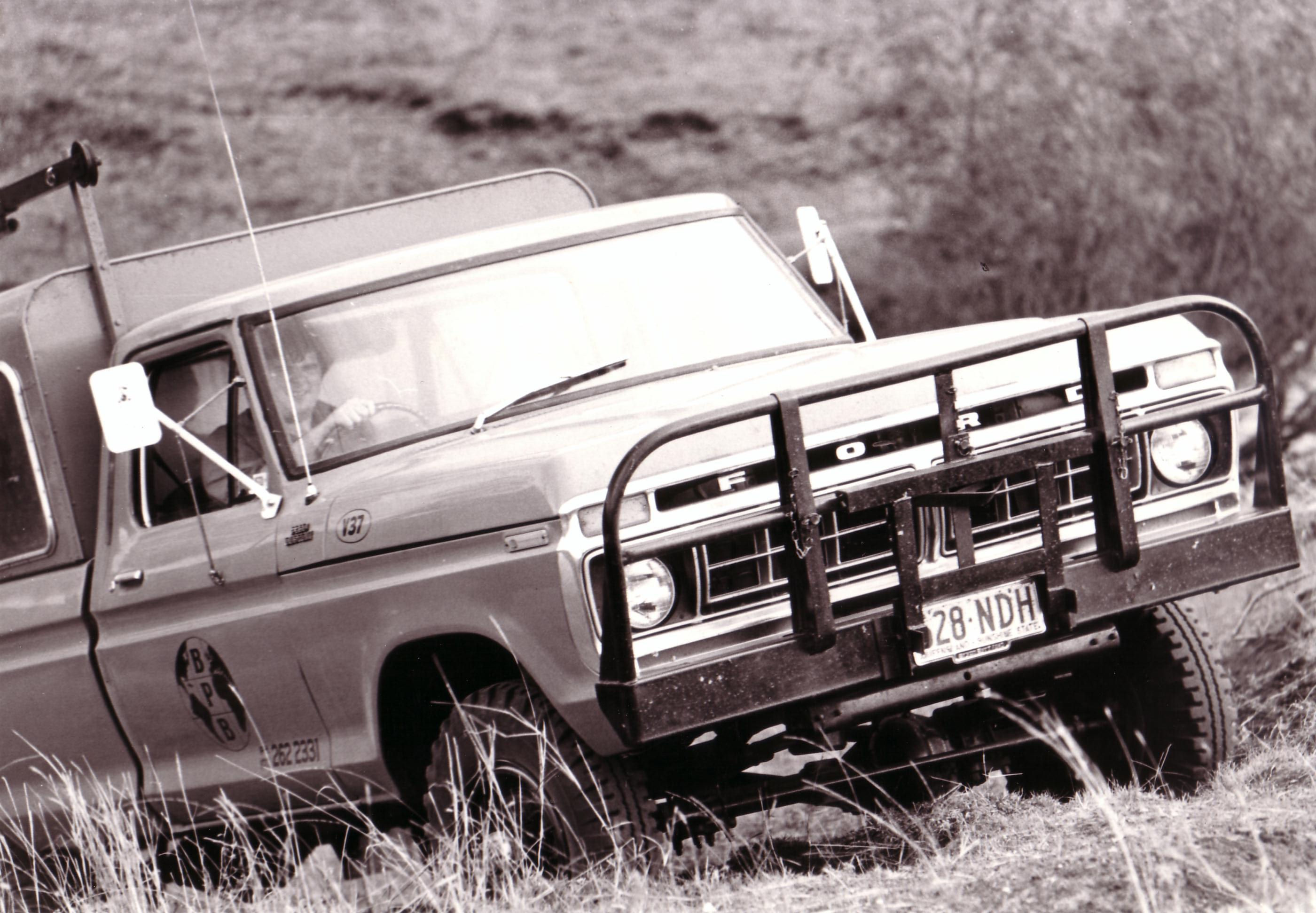
Richard ‘Rhino’ Williams “That’s me driving V37! It was a Ford F250 6-cylinder petrol engine. When I first arrived in Australia the LWB Landrovers were still around, they had PTO driven generators under the passenger seat!”
V57
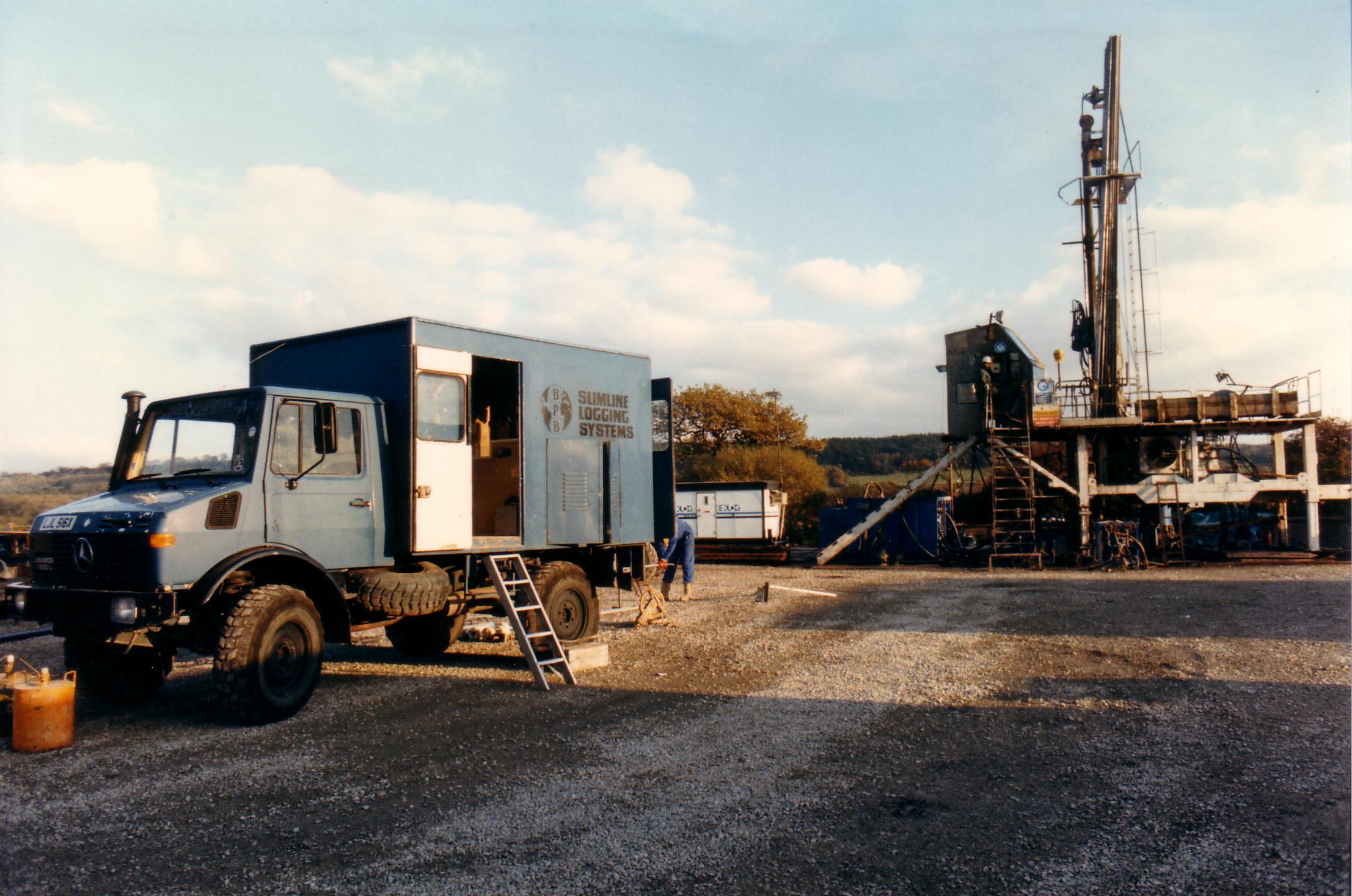

Mercedes Unimog 1300L LJL516X registered 1982, 5675cc diesel

Nick Reade “So it came to vehicles being replaced and logging units being swapped from vehicle to vehicle that we had to run two number sequences – one for the Vehicles and one for the Logging/Winch Units. That Unimog for instance was V57/77, i.e. vehicle #57 with unit #77 inside it. Jamie designed the whole thing.”
Nigel Doe had the misfortune to roll the ‘Mog one night.
V62

Poncin 8×8 ‘cablecar’ (see V148 for the Merc flatbed)
V121

Volkswagen WRY497S first registered April 1978, 1984cc diesel, last V5 1995
Nick Reade “I’m pretty sure that the VW van was V121. At first it was a logging unit with that old electric winch in it that had previously been in Van 3A. Only later was it changed to be the SRS truck, which is how we see it in the foto with Sam.”
V122


Volvo 303 AVO111T. See also No. 44
Nick Reade “Most of us really liked using this truck. A-type winch but not on its skid format. I think it was unit #54.
We did get a second 303 – V130 I think it was.”
V123

Volvo 202 T reg
Nick Reade “Our small C-type winches started off inside the early Haflingers & Snow Trac vehicles, then found themselves inside the Volvo 202 vehicles, then again re-appeared in the Poncin vehicles – all on NCB Opencast ops as contracts came & went.”

Two Volvos, one is BTV600T
First registered December 1978, 1990cc petrol, last V5 2019
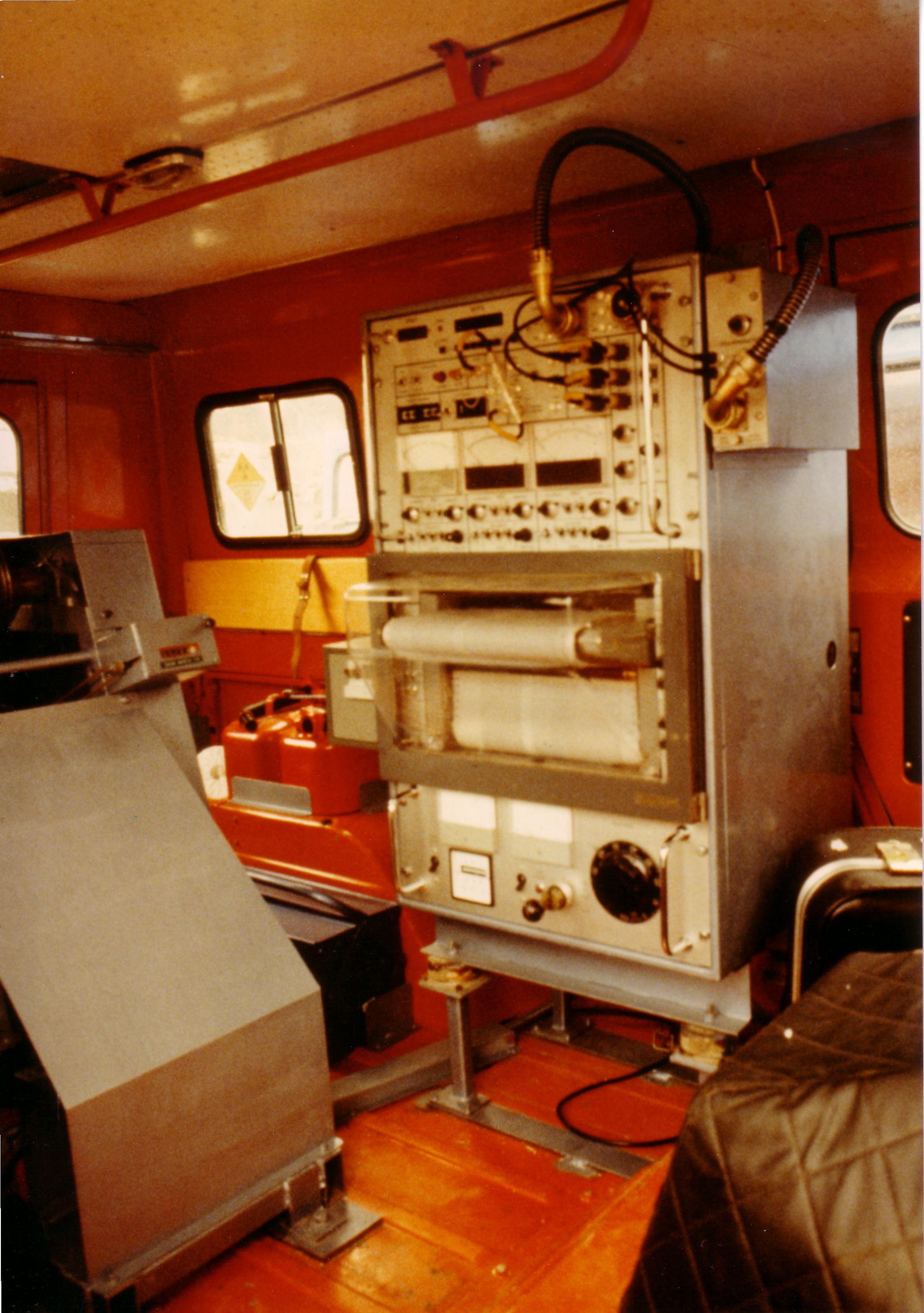
Nick tells me this has an FS1 ‘Function Panel’, introduced in 1975.
Dave Firth “This is a Volvo 202 from about 1978 to 1980ish. The red interior, the handrail on the roof, the curved window corners and the engine cover with black patterned material on it all indicate an opencast Volvo 202. I know, I need to get out more!!”
Volvo 202
Registration ?RA 394?
ERA394T was a Volvo (green) first registered July 1979, 1990cc petrol, last V5 2004?
V126

Nick Reade “Mercedes van DCH931T pictured. This was V126; fitted with our first ‘Intermediate’ winch.
At some point there was a second similar Merc van – perhaps V132 or V136? Had a skid winch in it for a while – not bolted to the floor but solidly jammed in with wooden struts! Perhaps used as the SRS truck at some time too.”
V127

Steyr-Daimler-Puch Pinzgauer 6×6 NTV66M registered 1977, 2499cc petrol, SORN
Ian Tomlinson “Lots of memories from opencast when I started working with LJ on the St Aidan’s Extension with the Pinzgauer, broke down on the M1 with the fan belt pulley bolt snapped…oh happy days.”
FTV788L

Craig Robinson “6-wheel Pinzgauer logging unit in Wakefield, one of 5 units pulled out by winch tractor before the pubs closed.
The canvas troop carrier Pinzgauer was a loner/rental from a farmer/engineer and Haflinger agent based just north of Belford near Lindisfarne. The Yorkshire Haflinger at Anglers Opencast lost its gearbox and I took it to Belford to be repaired, I picked up the Pinzgauer and at ELK we strapped a skid based unit in the back and I used it in Yorkshire for a month or so before I headed elsewhere.”
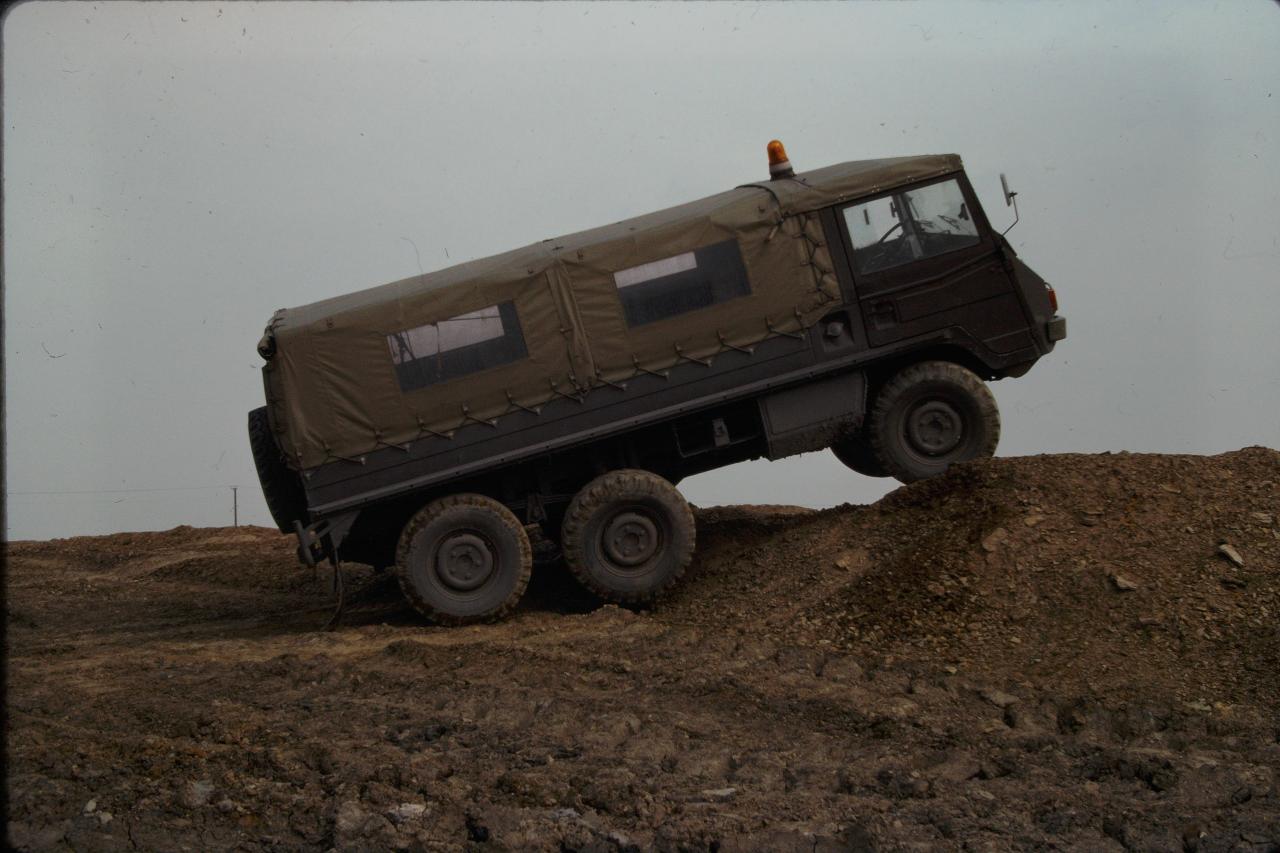
Puch, green, three axle, petrol, registered July 1973, last V5 8 December 1983.
V130
Perhaps another Volvo 303, see V122
V134
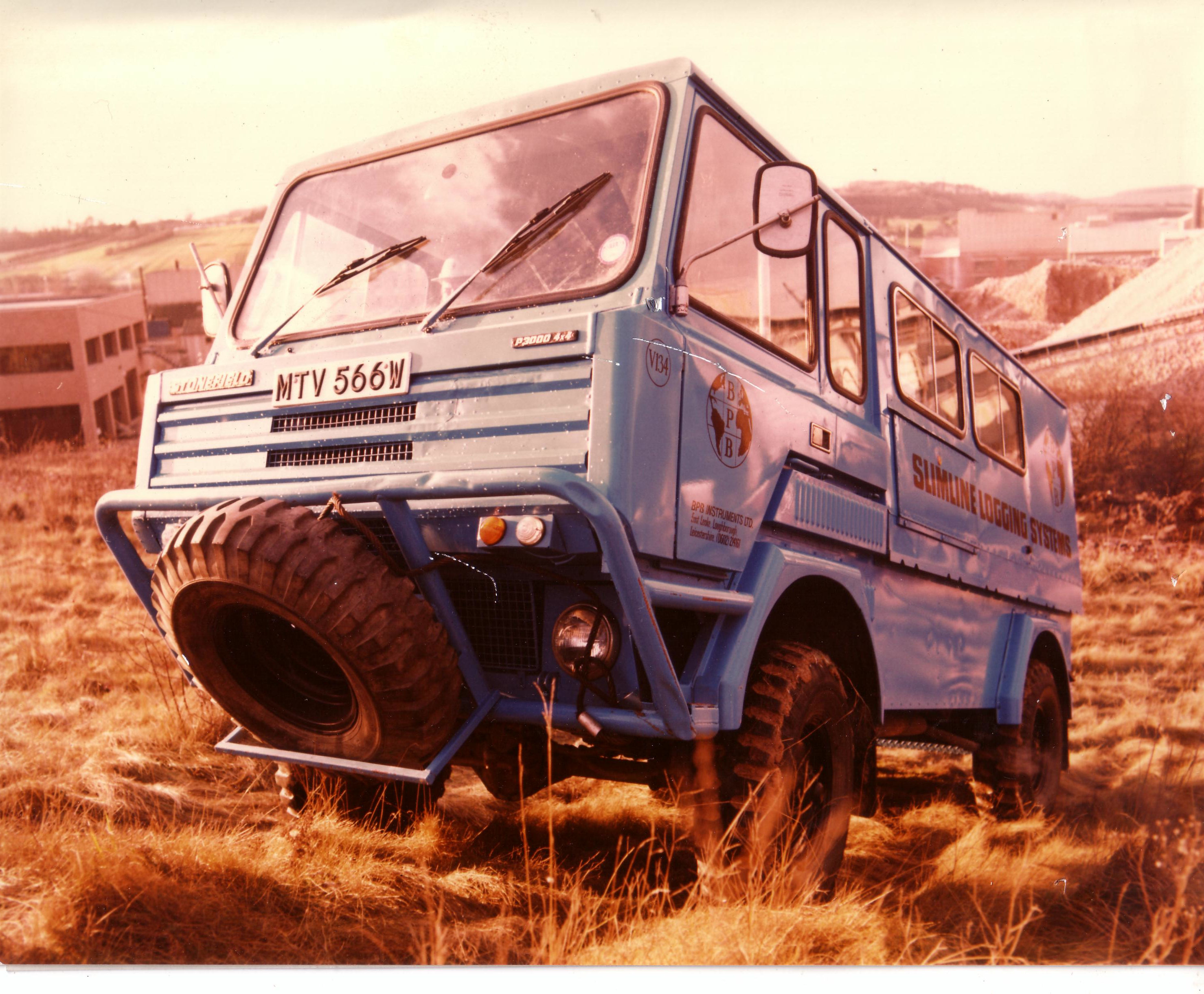
Stonefield MTV566W registered 1980 2994cc petrol, last V5 1986
Nick Reade “That V134 Stonefield was a lemon. Probably the worst vehicle we ever had; didn’t last long.”
David Firth “This publicity photo was taken at the back the BPB buildings. As I remember it, I had to put a lot of pressure on the brake pedal (as well as the automatic gearbox in Drive) to avoid the Stonefield rolling down the hill!! So perhaps Nick has got it right!”
V135
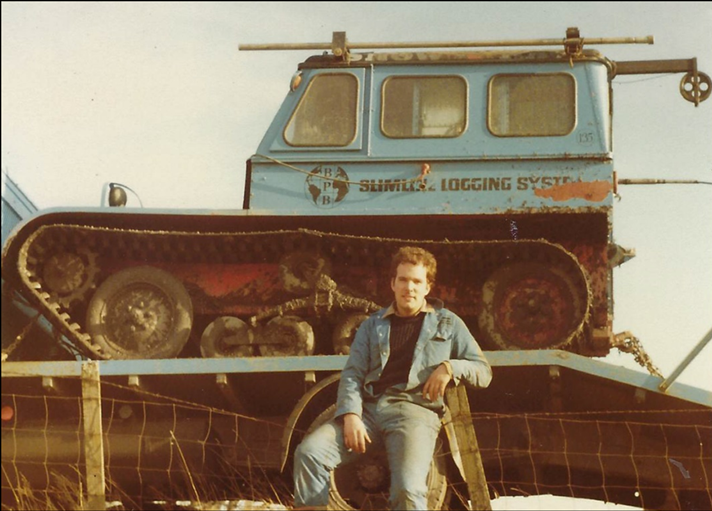
Snow Trac in 1981 (no ‘V’ but taken to be in that series)
Ian Tomlinson: “Spent many hours in the one in Ayr, we used to base it in Douglas Water in 1986/87. Great things to drive but a nightmare to load on the Ford beaver tail..”
John Campbell replies: “remember it well, we had Snowtrac V135 in Ayrshire in those days.”
John tells us there was another Snow Trac covering Lanarkshire based at Marshal Allan’s yard at Rigside, just the other side of the M74 from Douglas.
V141
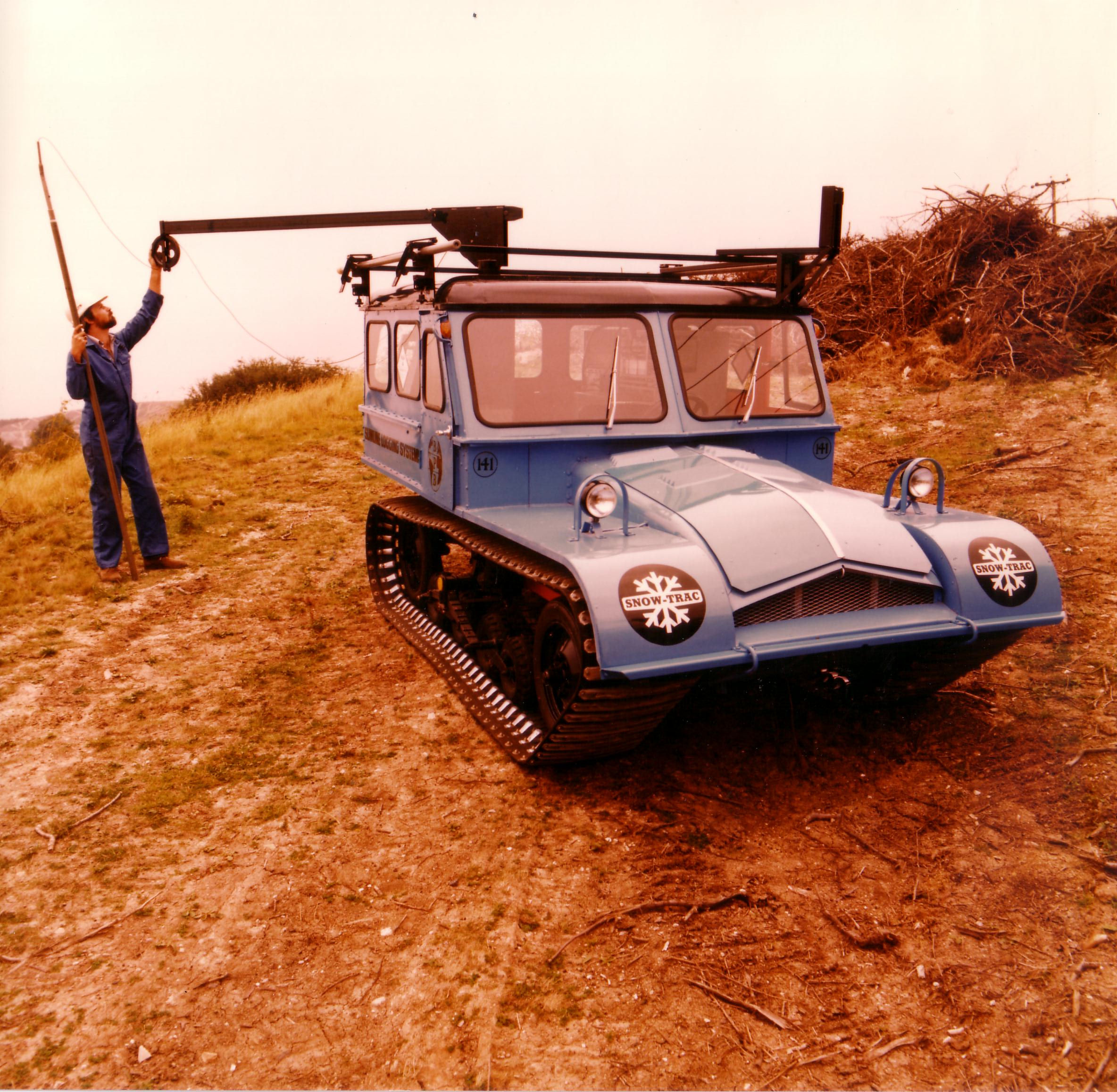
Snow Trac (no ‘V’ but taken to be in that series)
V148
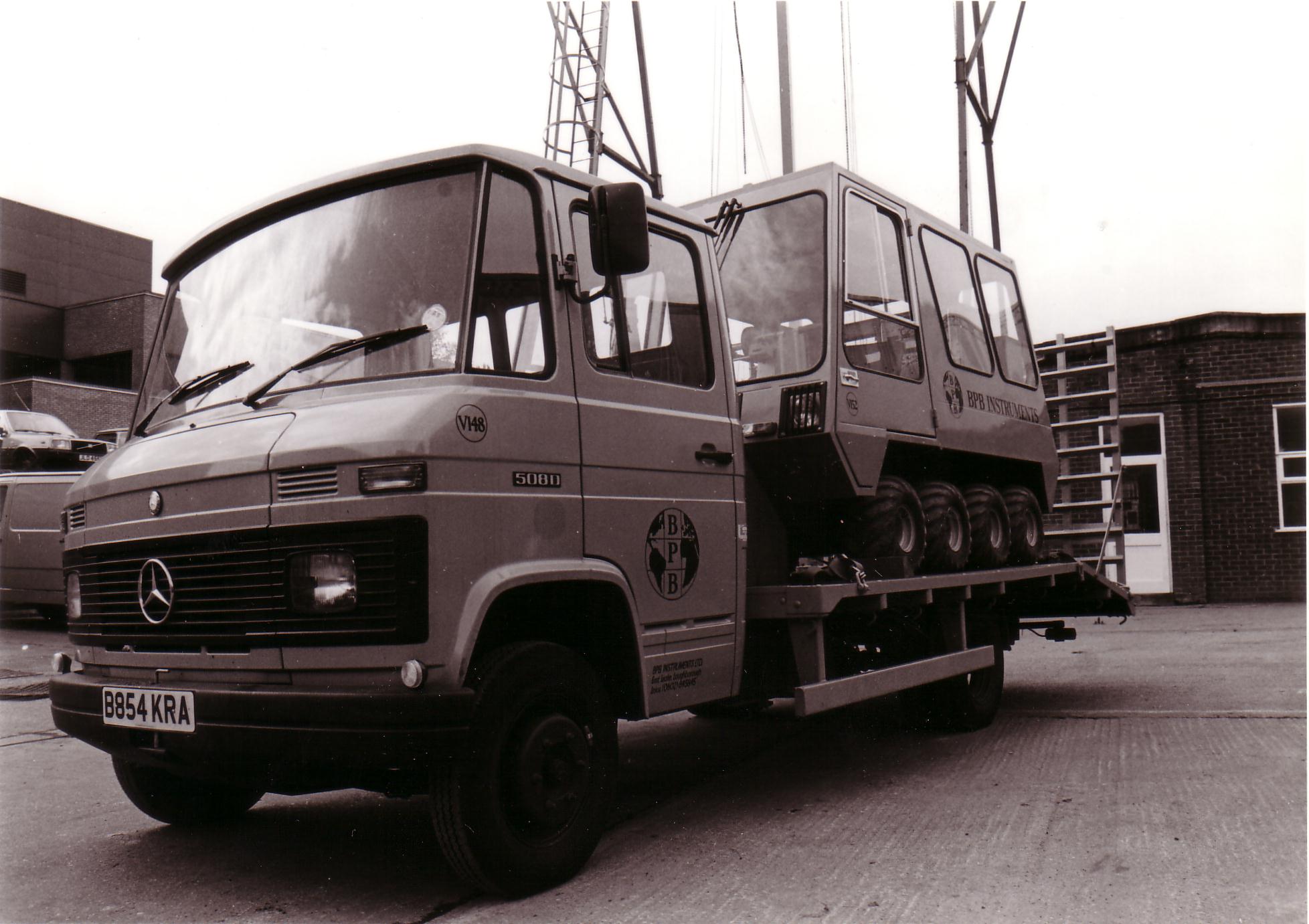
B854KRA Merc registered 1985 (see V62 for Poncin)
D601UAU
Merc with V number barely visible
First registered September 1986, last V5 2001. 3972cc diesel.

Alongside Land Rover F89FRM
V149

Open Cast Poncins in ‘dirty physics’ at East Leake, June 1985. V149 at the front
V151?

B196KRA (1984/85)
V229

Photographed at the same time as V1057, Canada. Single axle Compact truck?
V340
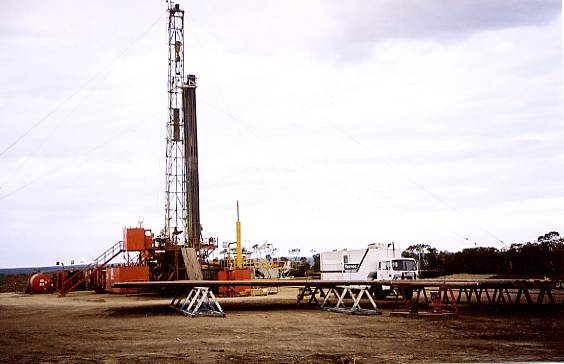
“Daisy May”, Australia
Matt Barnes recalls “My intro to the Oil & Gas industry was on Daisy with Rex Tench in May-94. Mobing back from my 1st minerals hitch as a trainee at Newlands Coal. I was dropped off halfway to a MGC (Mitsubishi Gas & Chemicals) CSG well. Did not realise what the hell I was in for over the next 30 yrs”
V427 and V434
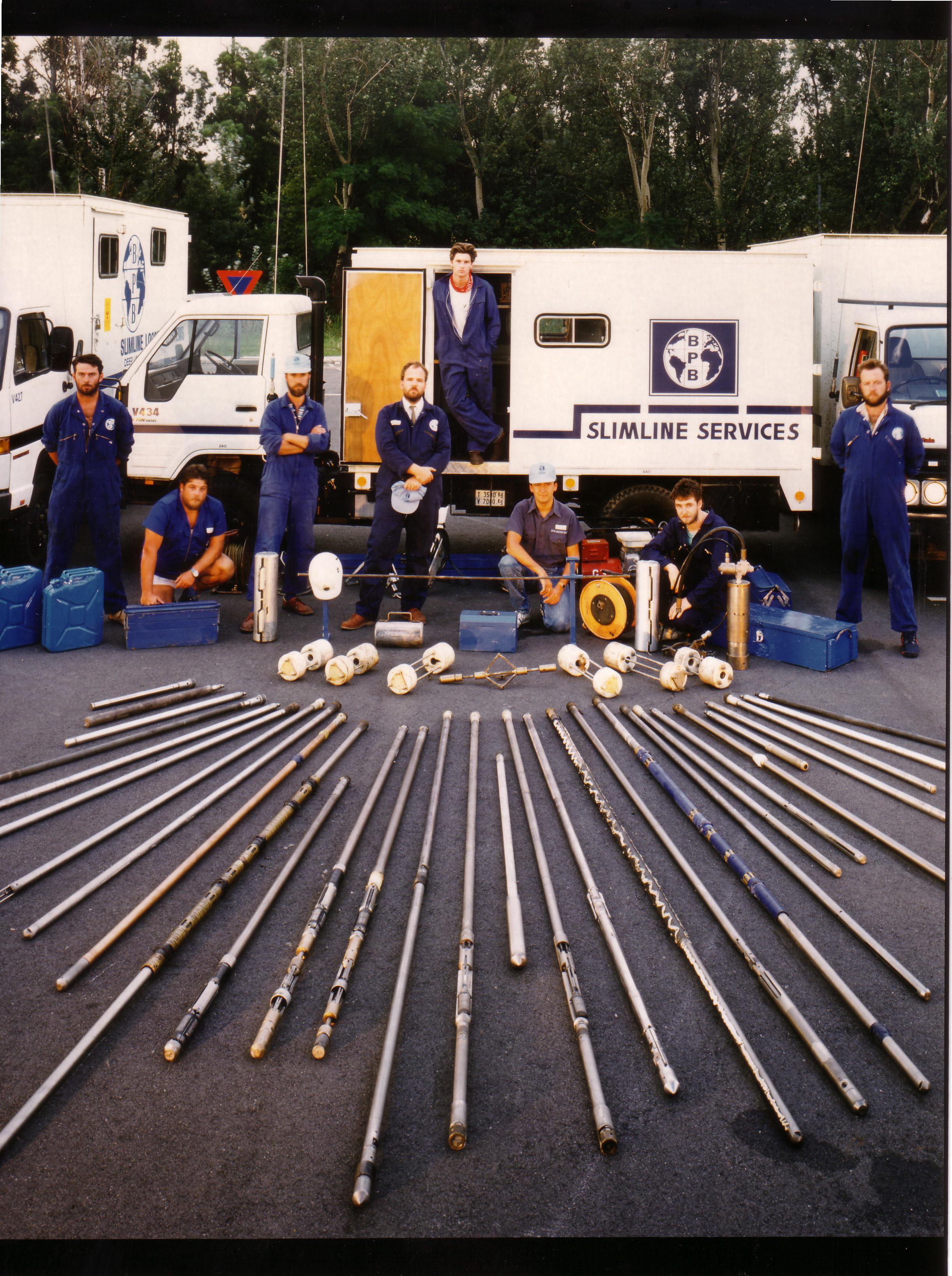
V901

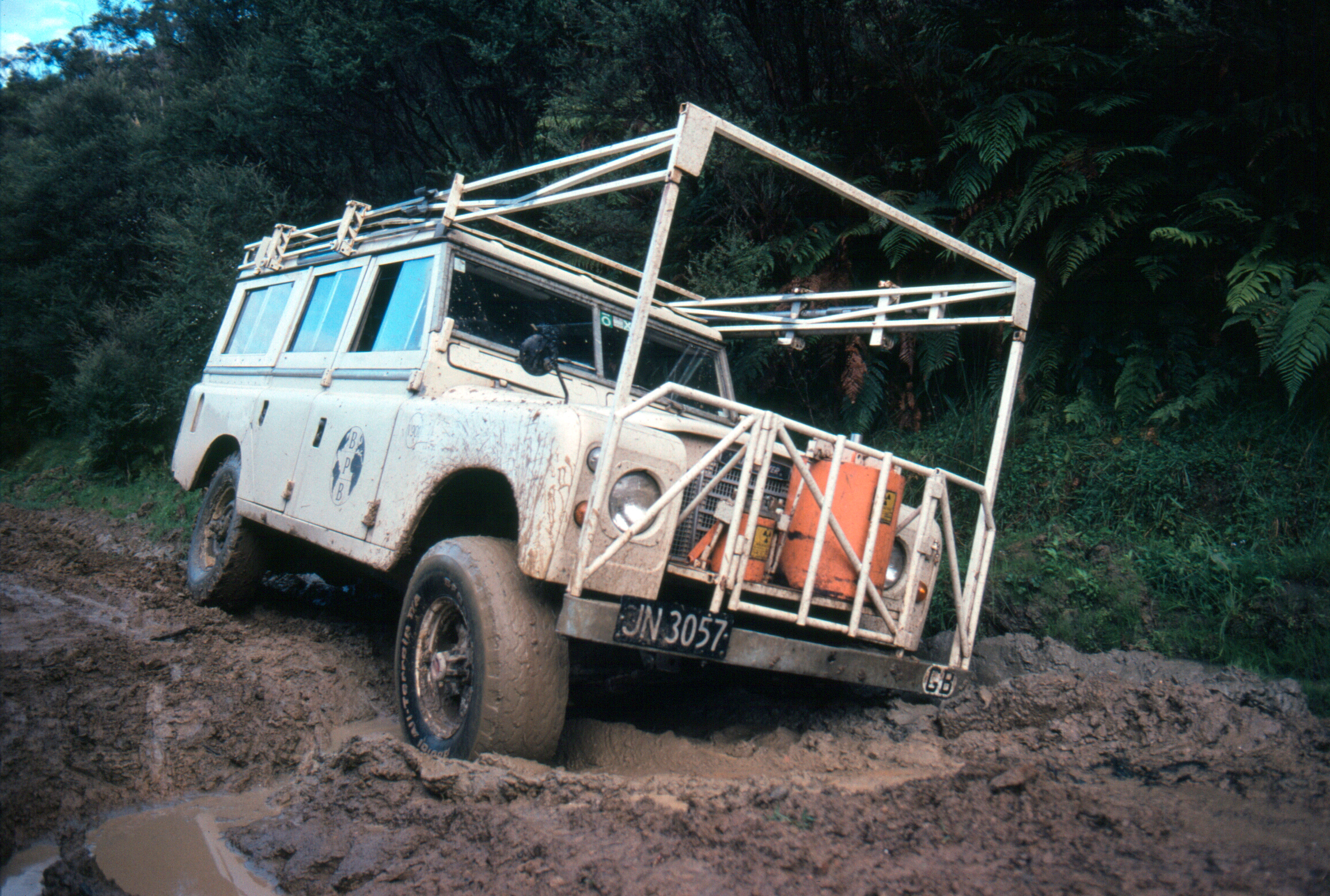
Land Rover SJD81R, UK registered 1976/77
Indonesian Trailers
Craig Robinson “All three units, red, yellow and blue”

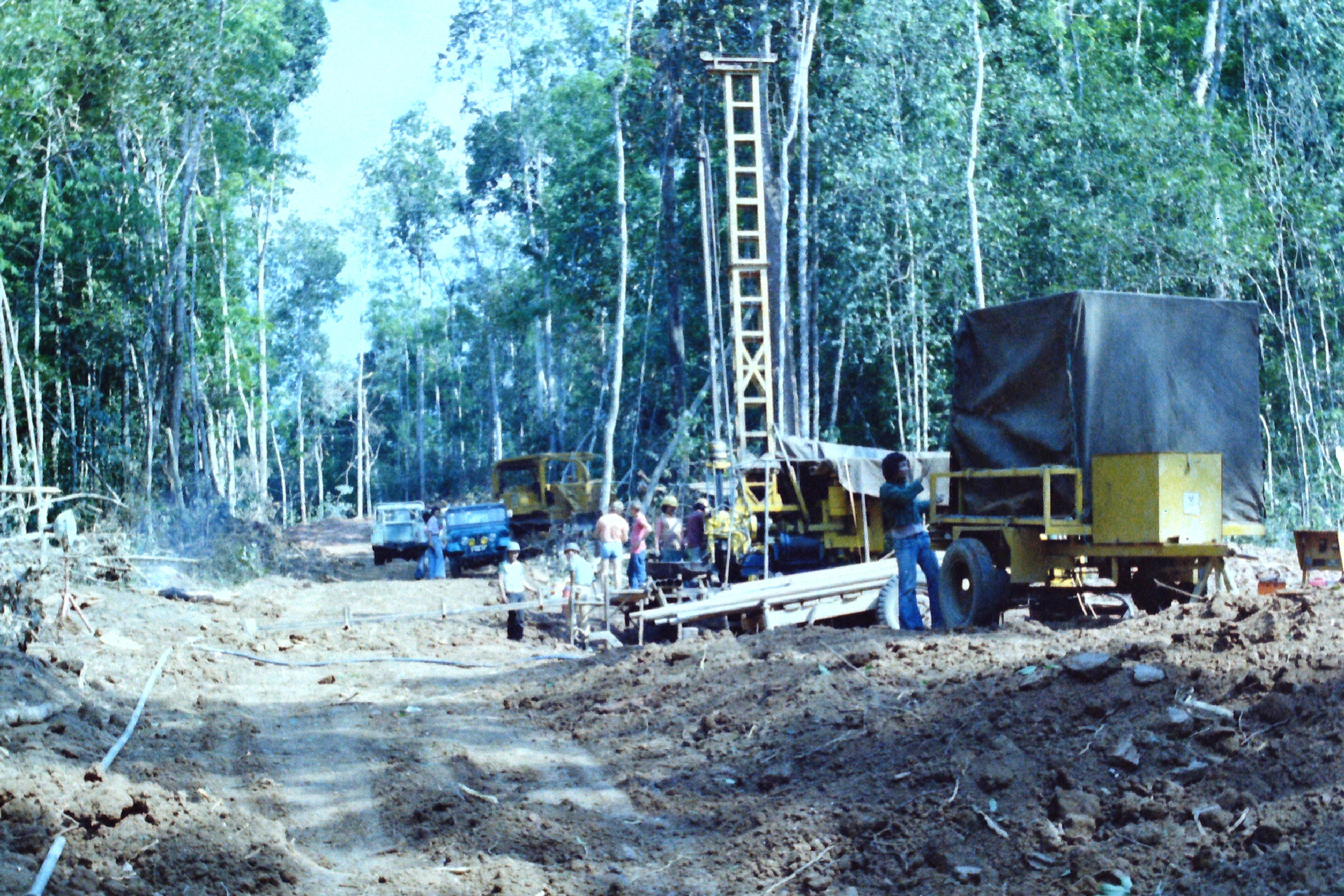
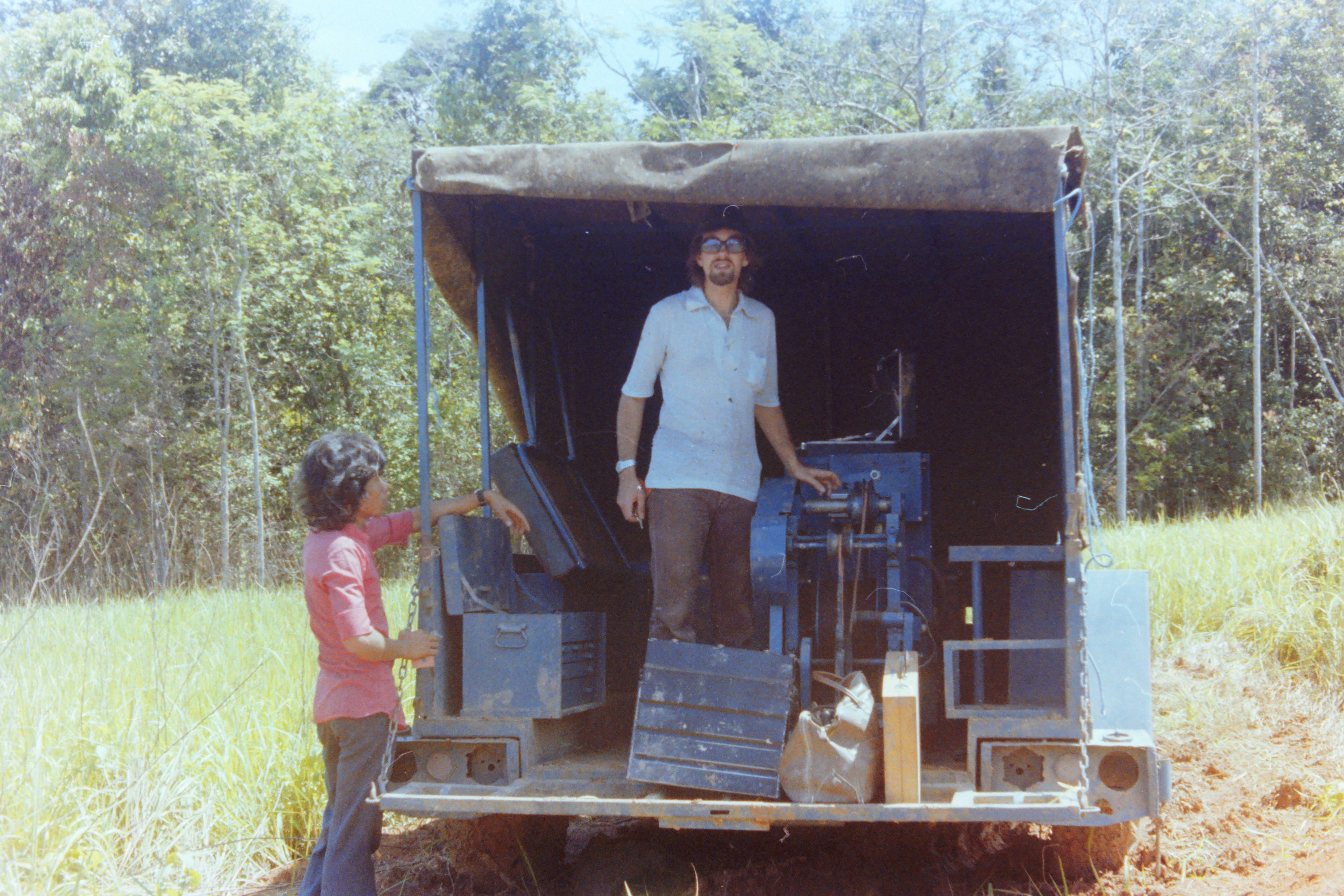
Craig Robinson “Nigel Powell in Sumatra 1977-78. Unit in old ammo trailer” (see also No. 7)
V1001
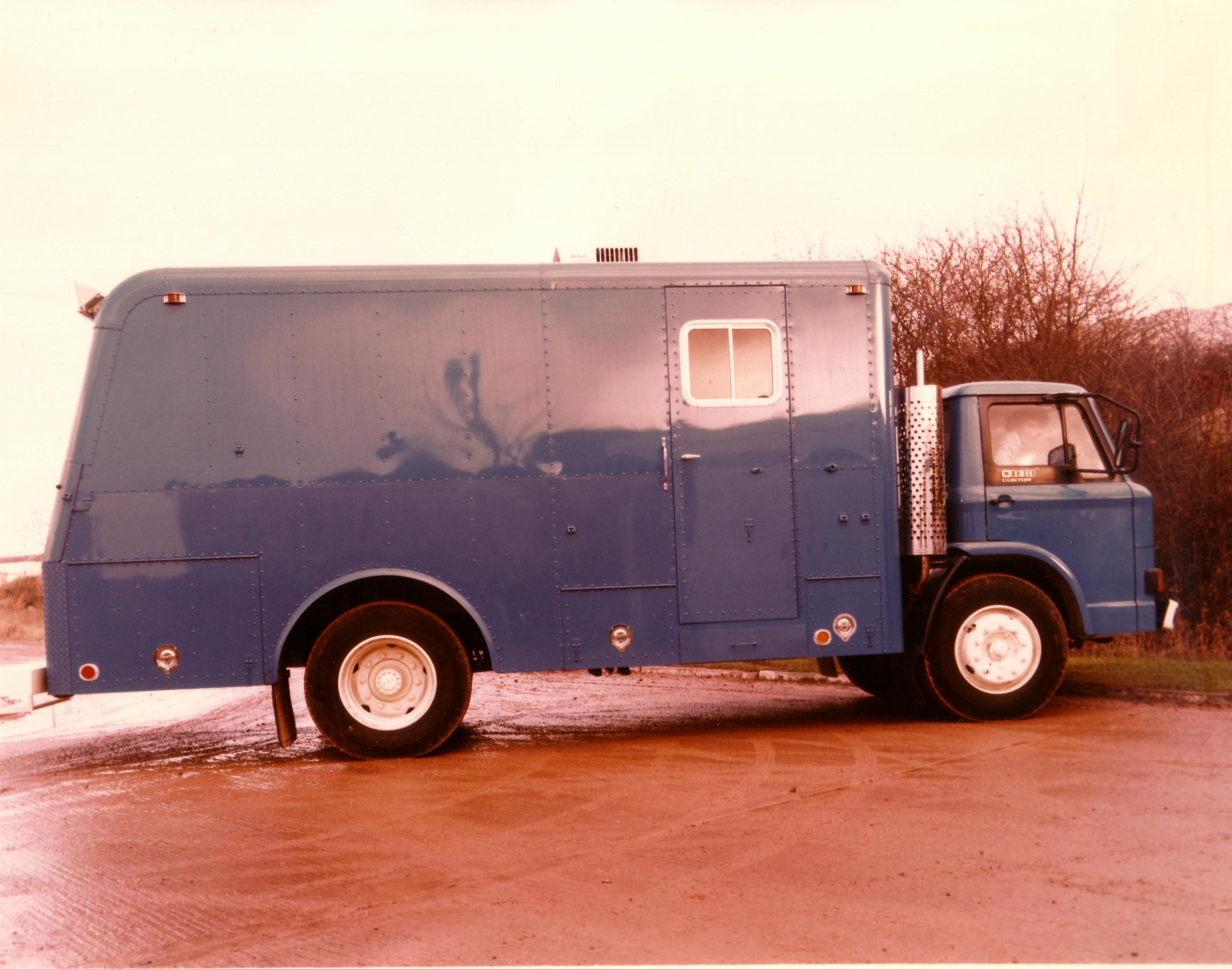
The first Oilfield unit, V1001, was a Ford 1311 13-tonner. She was shipped to the US for a body and winch fitted by Energy Products and on return was X registered (1981), making her seem younger than ‘Nellie’ V1002.
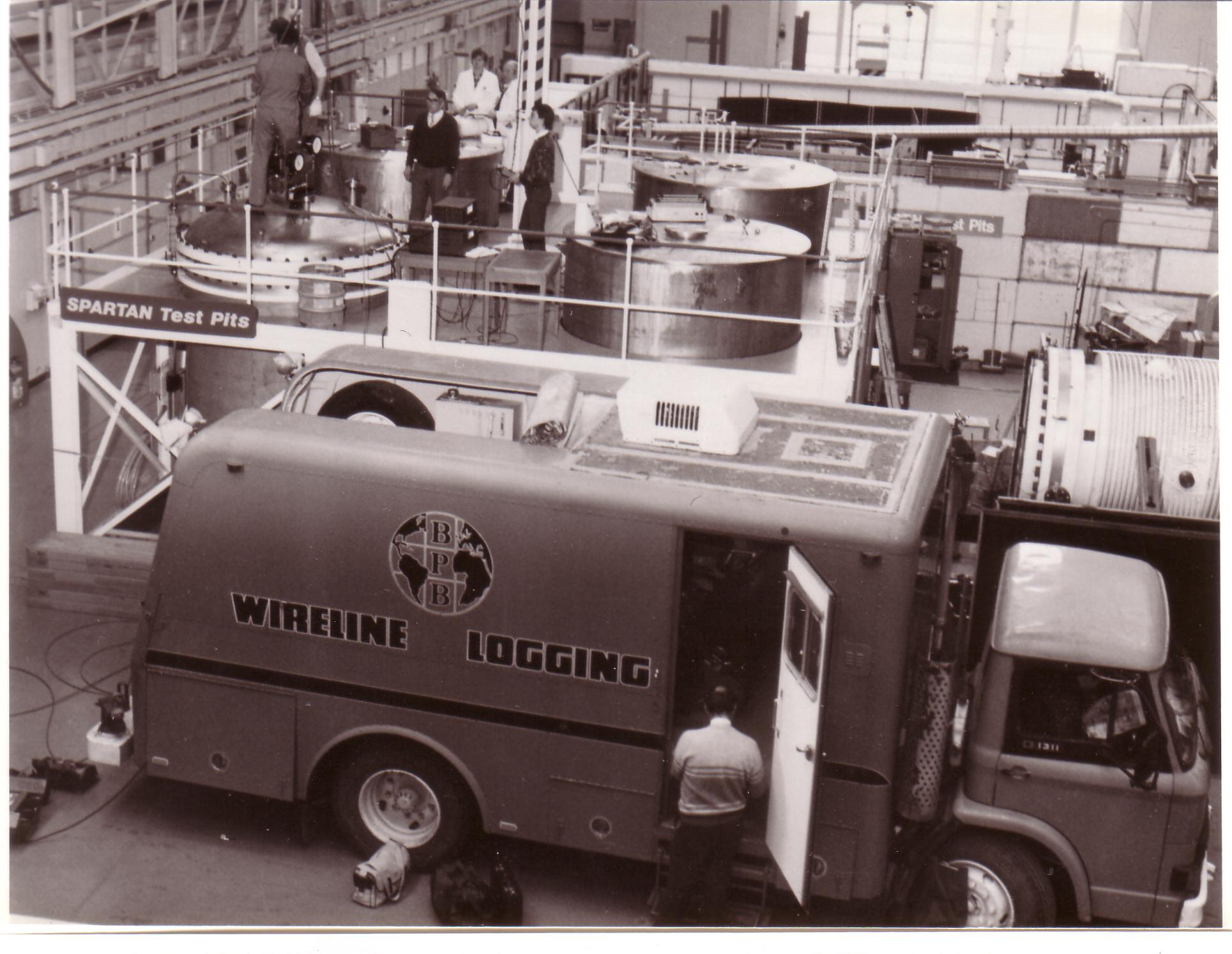

RTV785X registered November 1981, last V5 1983
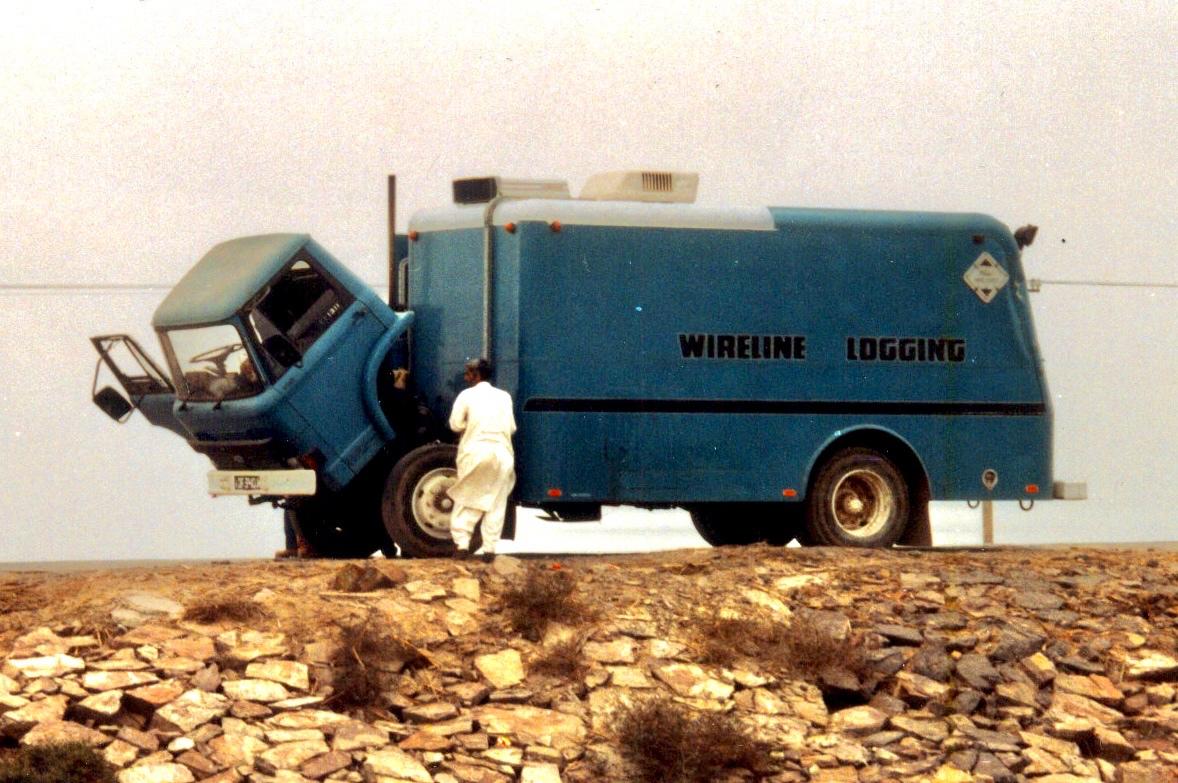
Simon Dutton tells us “Always having to clean the fuel filter on that truck every 500km”
White Elephant
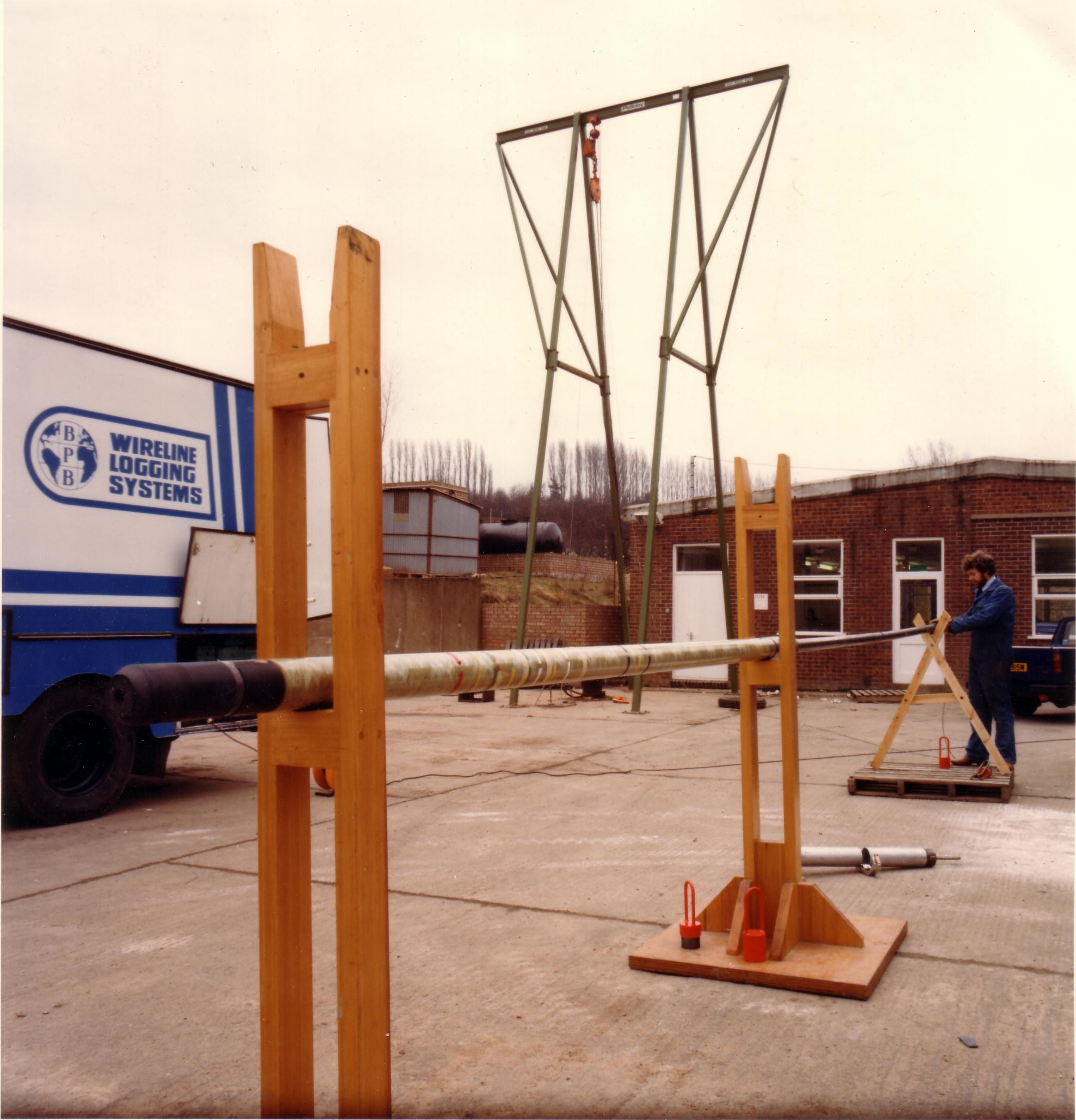


V1002 as originally bodied
V1002
V1002 ‘Nellie’ (D1211 12-tonner) cobbled together in the UK
LRB347W, first registered August 1980, last V5 2000
One of the ‘bread vans’
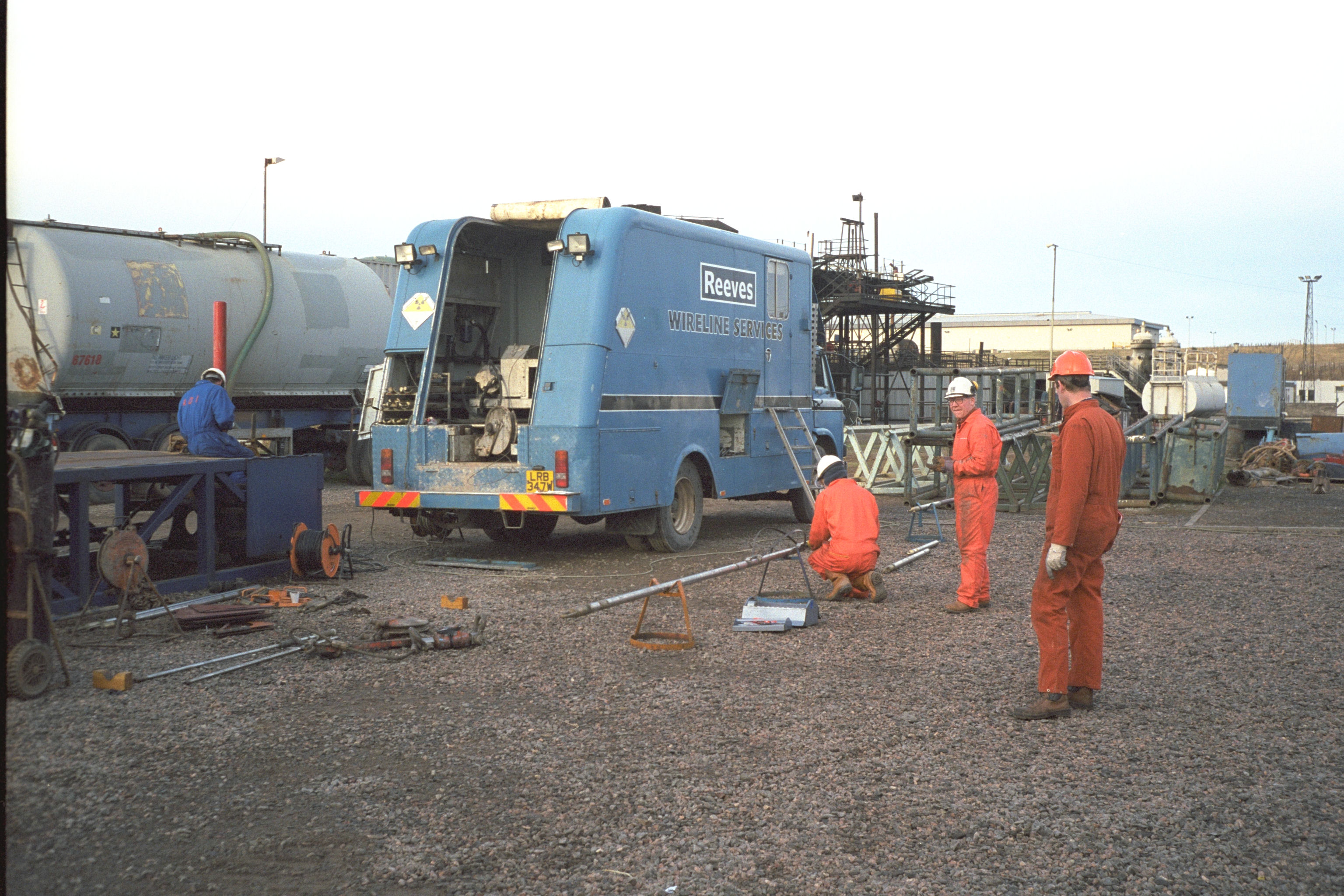
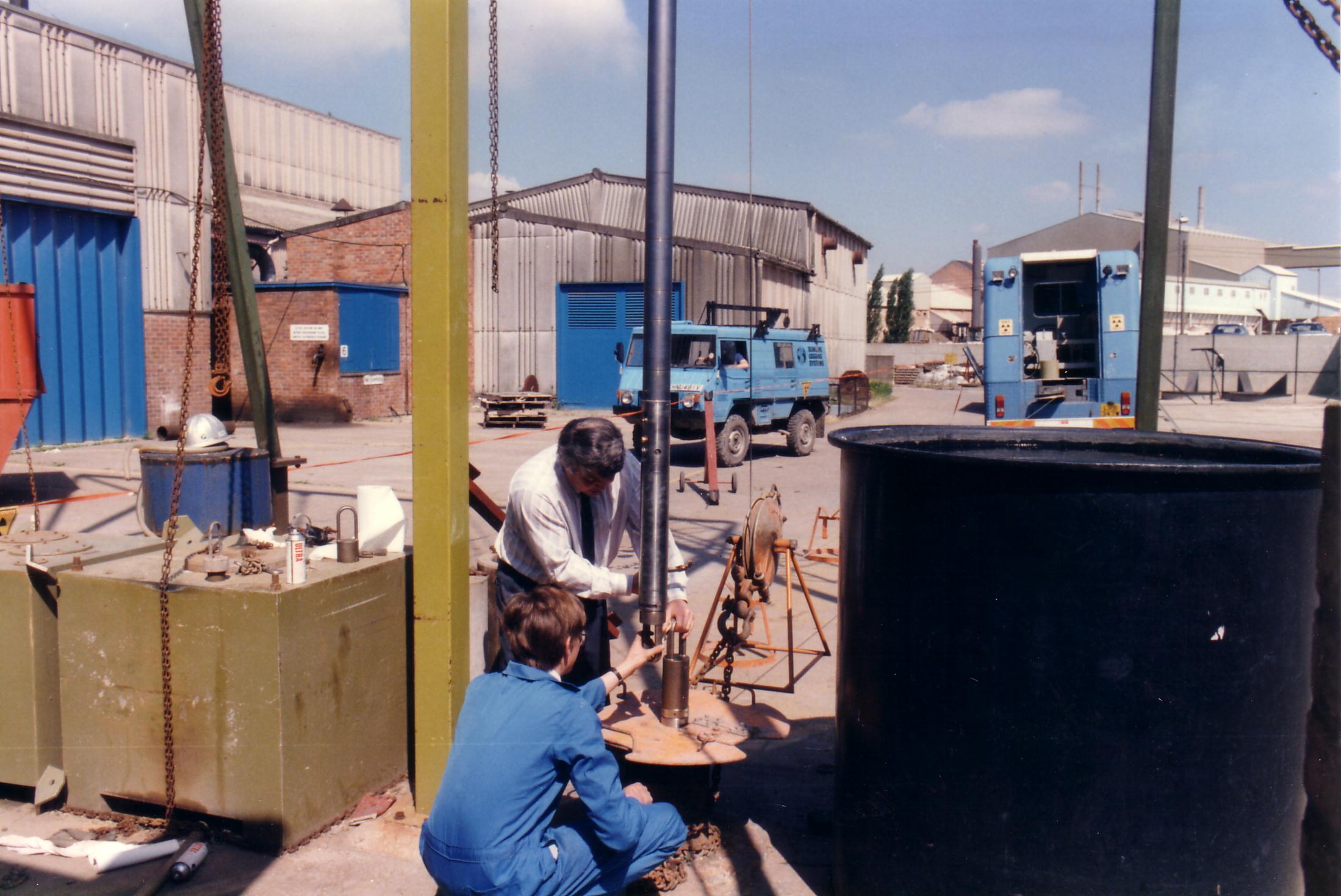
Nigel Cheese tells us “Some of the Sellafield jobs were done from a low loader. I drove it there once, was driving up some of the hills on the motorway on the hard shoulder at about 20 mph. Bloody scary with the artics going past at 60”
V1003
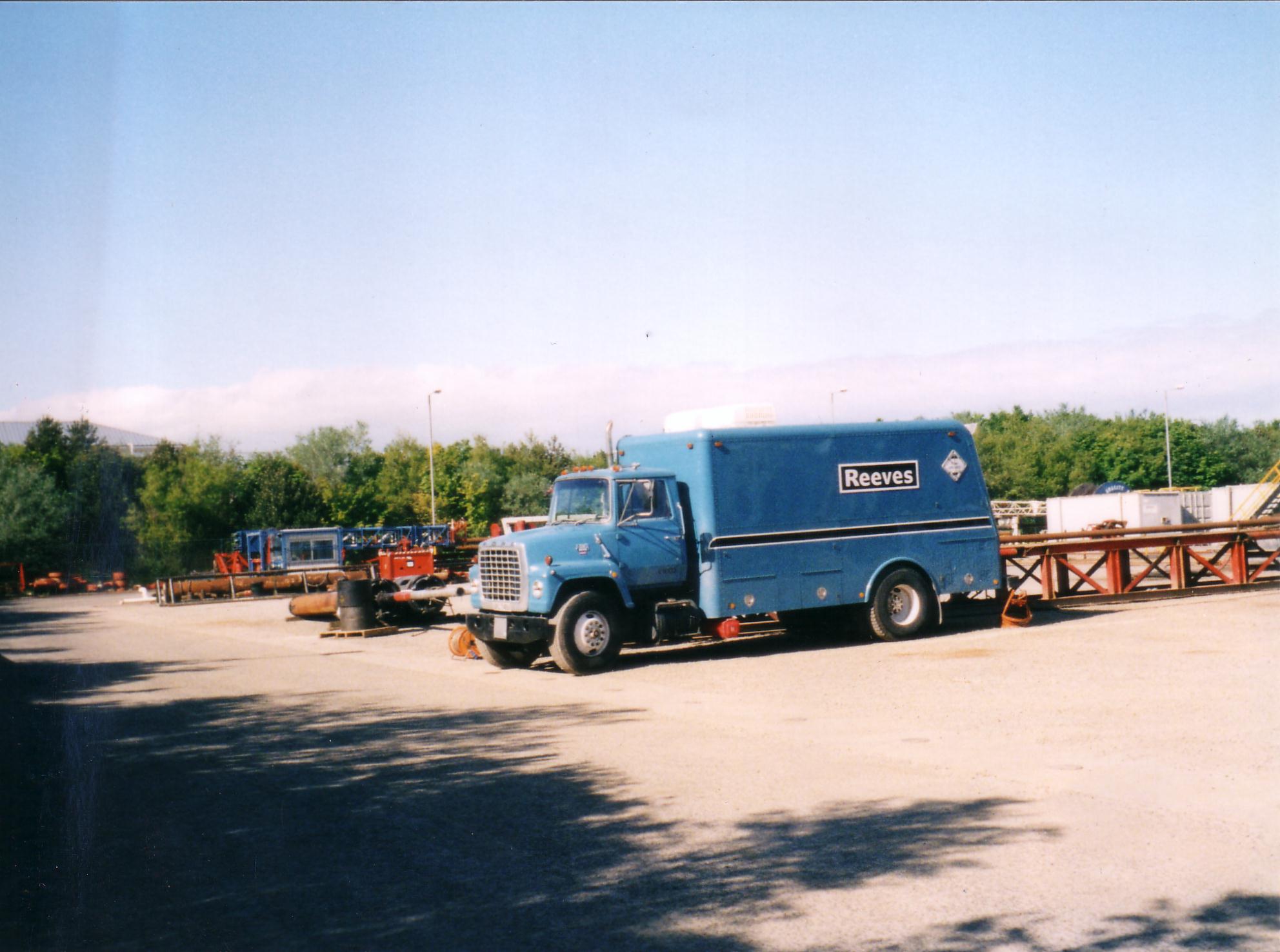
V1004
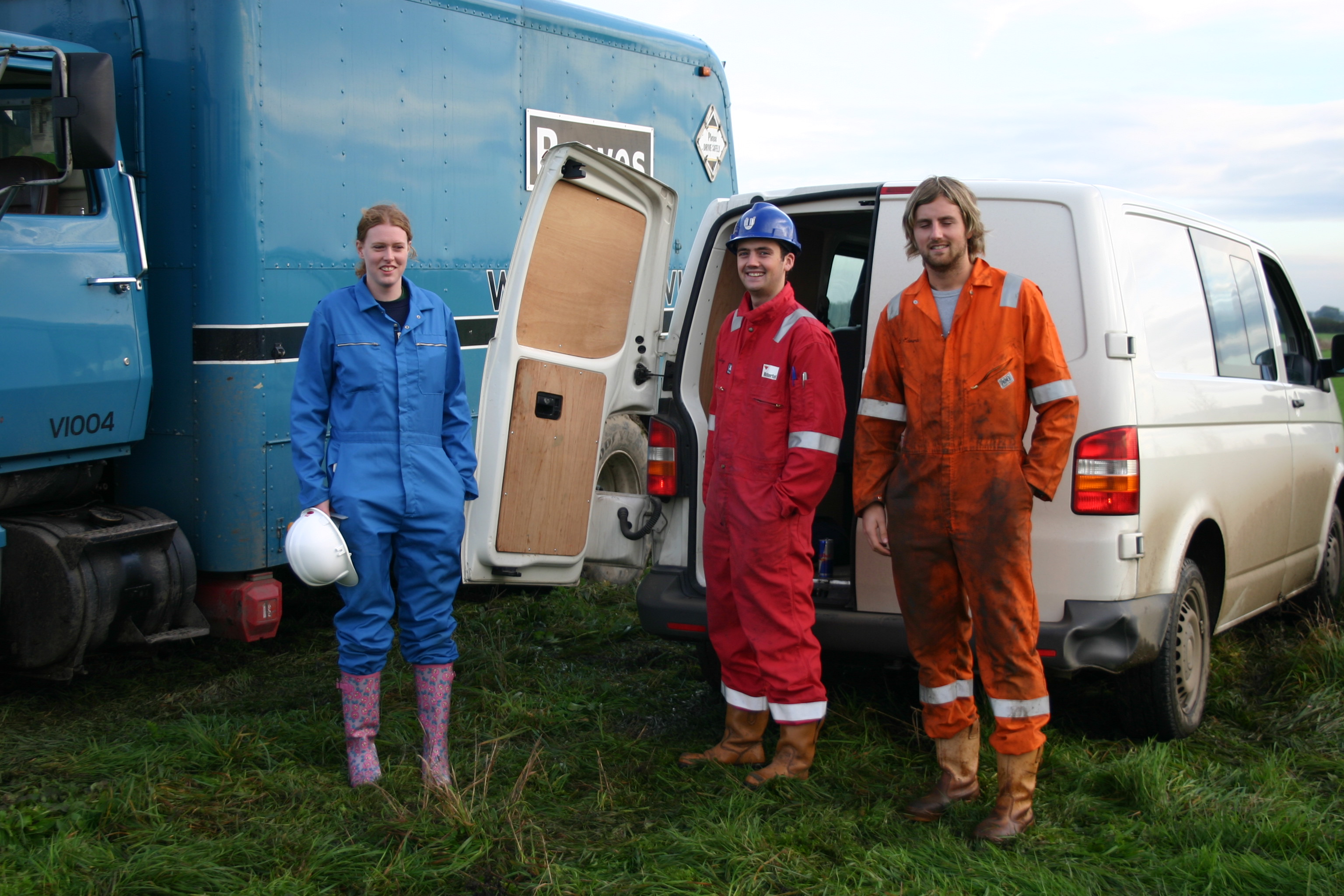
Ford manufactured 1982, first registered UK as URC819X April 1993, last V5 2011

Simon Dutton says “That old girl, along with V1003, probably had the longest lives of all the EP trucks. Great trucks to log with.”
V1006

First of the twin axle trucks
V1021

Famous for giving the crew, and visiting company man, so many electric shocks that the guys ran earthing wires to everything not bolted down.
V1022
Previous trucks were built by Energy Products (EP). For the second batch, from V1022, BPB found a cheaper manufacturer in D&W in Louisiana, and this proved another expensive false economy (Deek and Wilma composite bodies).
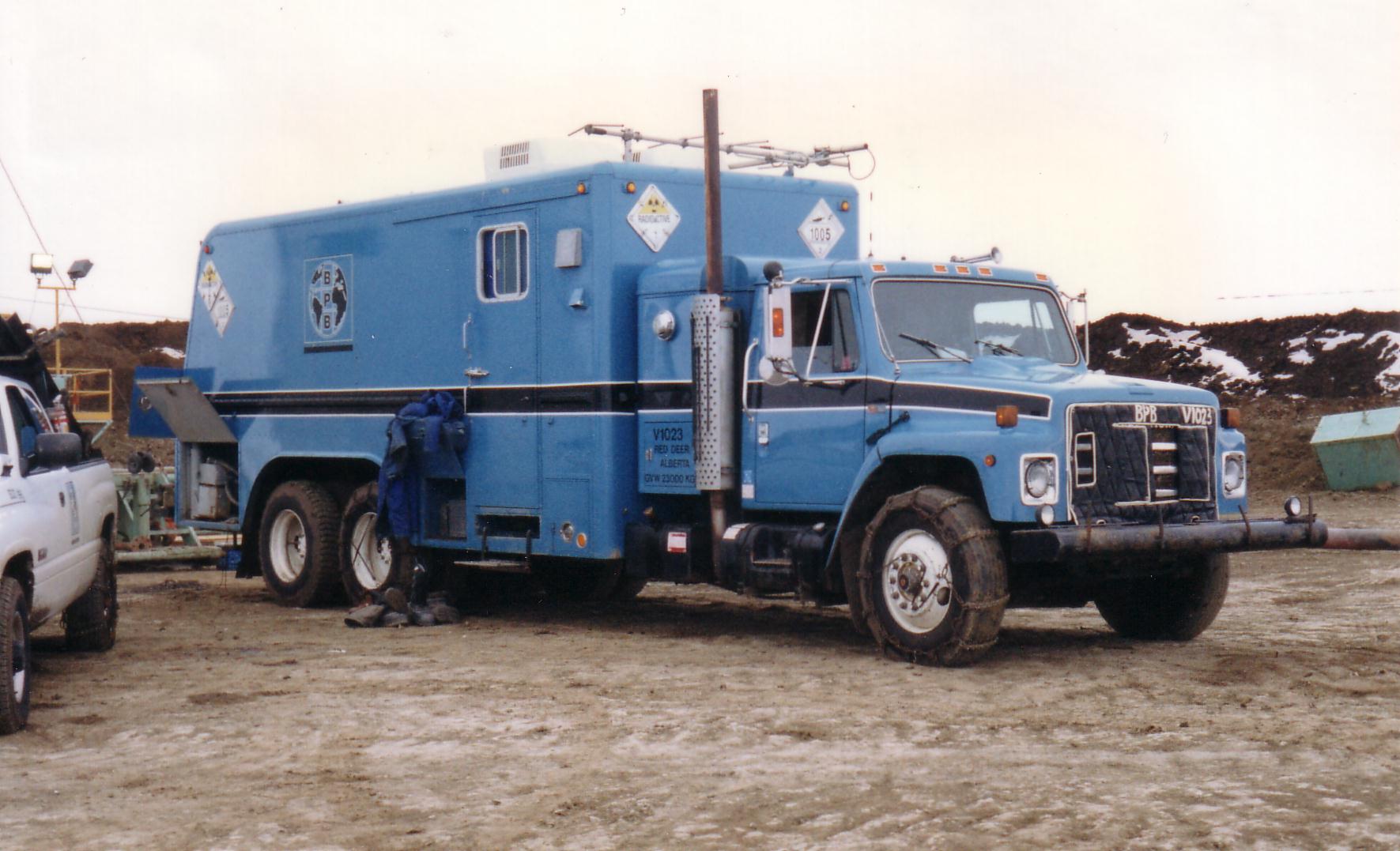
V1023


V1025

Simon Dutton “Reeves venture into Iran back in 2000 – 2003, my last and one of my most enjoyable overseas start ups for Reeves, V1025 and V1027 reunited after 10 years apart.”

V1027

C700PVO, International Harvester first registered UK May 1986, last V5 2007

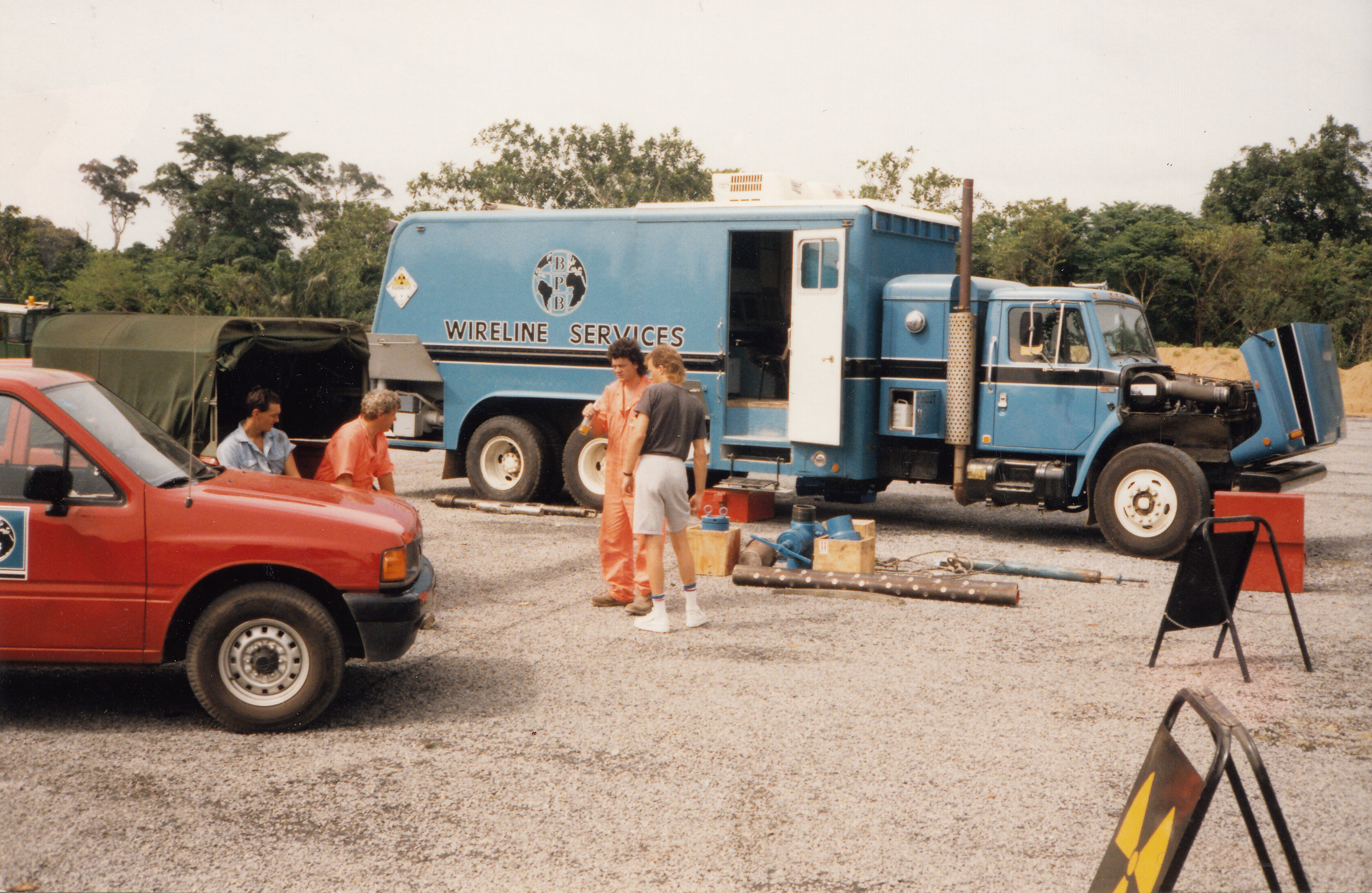
Did any truck go more places than V1027? Simon Dutton replies “from my memory V1027s history was UK, Nigeria, Holland, Madagascar, Holland / Germany, UK and Iran where I saw her last in 2003.”

Simon adds “you will see the ACs are the Carrier ones fitted for Iran and run off the engine not the generator, hence the ally conduit down each side of the front of the L cab to run the pipework to the engine.”
V1029

V1030

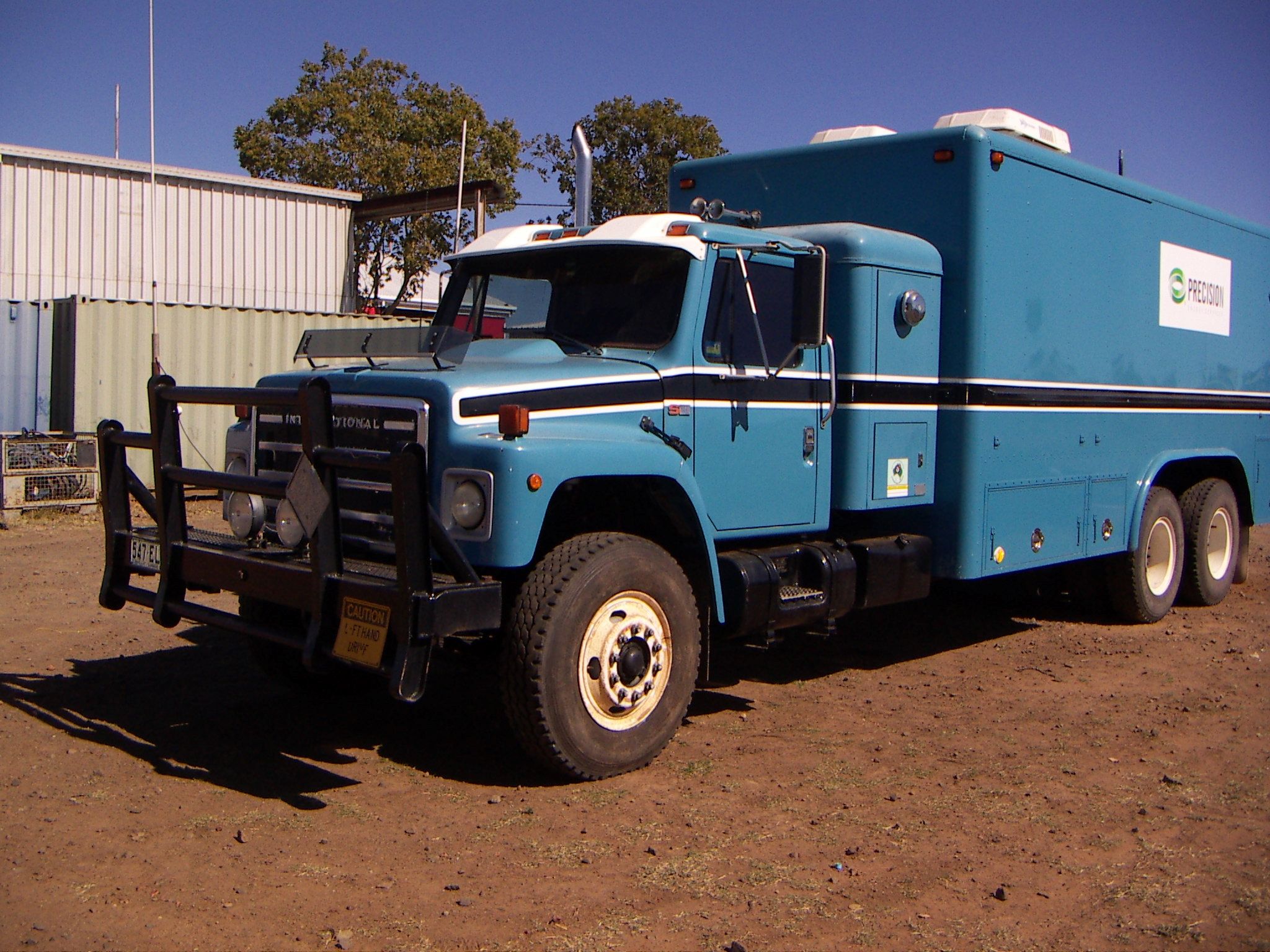
Stuey Dingwall tells us “V1030 came to Australia in 1989 and was only here for a short time and then went to New Plymouth, New Zealand for 9 years, and returned to Roma, Australia in 1998 and worked up until 2008 when it was decommissioned and sold to a local farmer.”
V1049

V1050
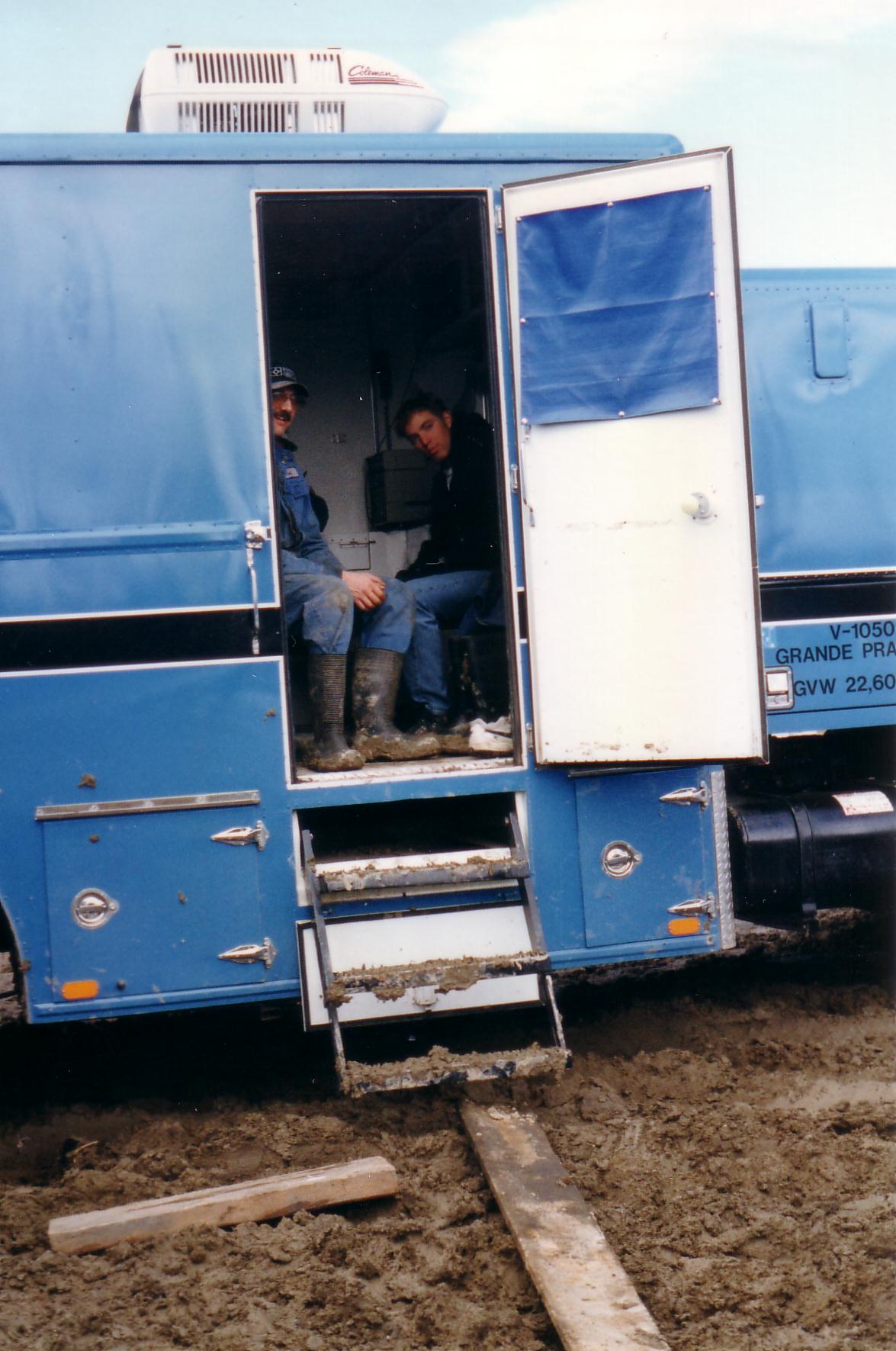
V1054

Joe Hall with V1054, Oklahoma City, Oklahoma
Simon Dutton tells us “As I recall from Rob Weihmann, these were originally 18 wheeler tractor units that Joe Hall bought and then had the chassis lengthend.”
V1055

V1056
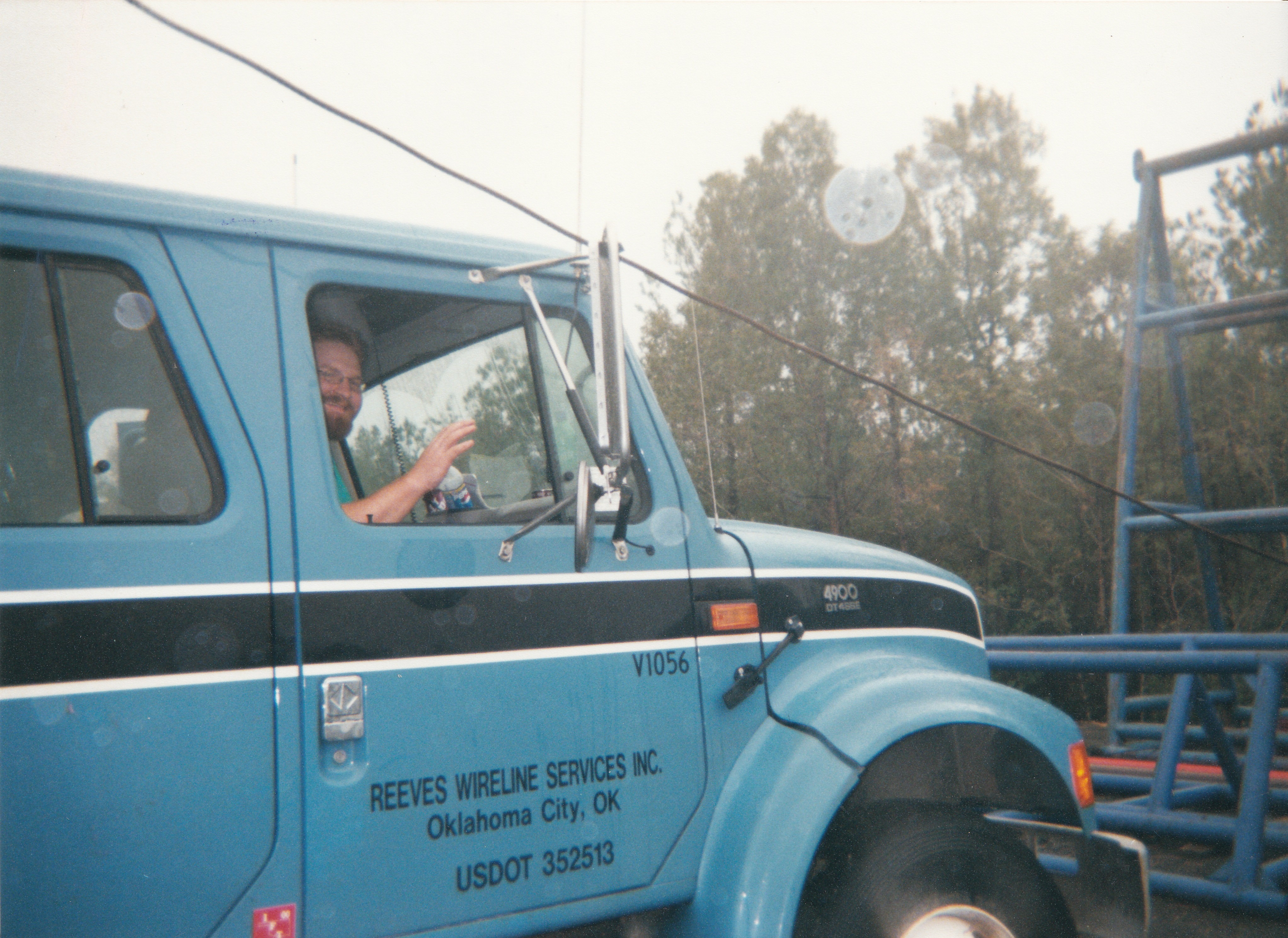
V1057
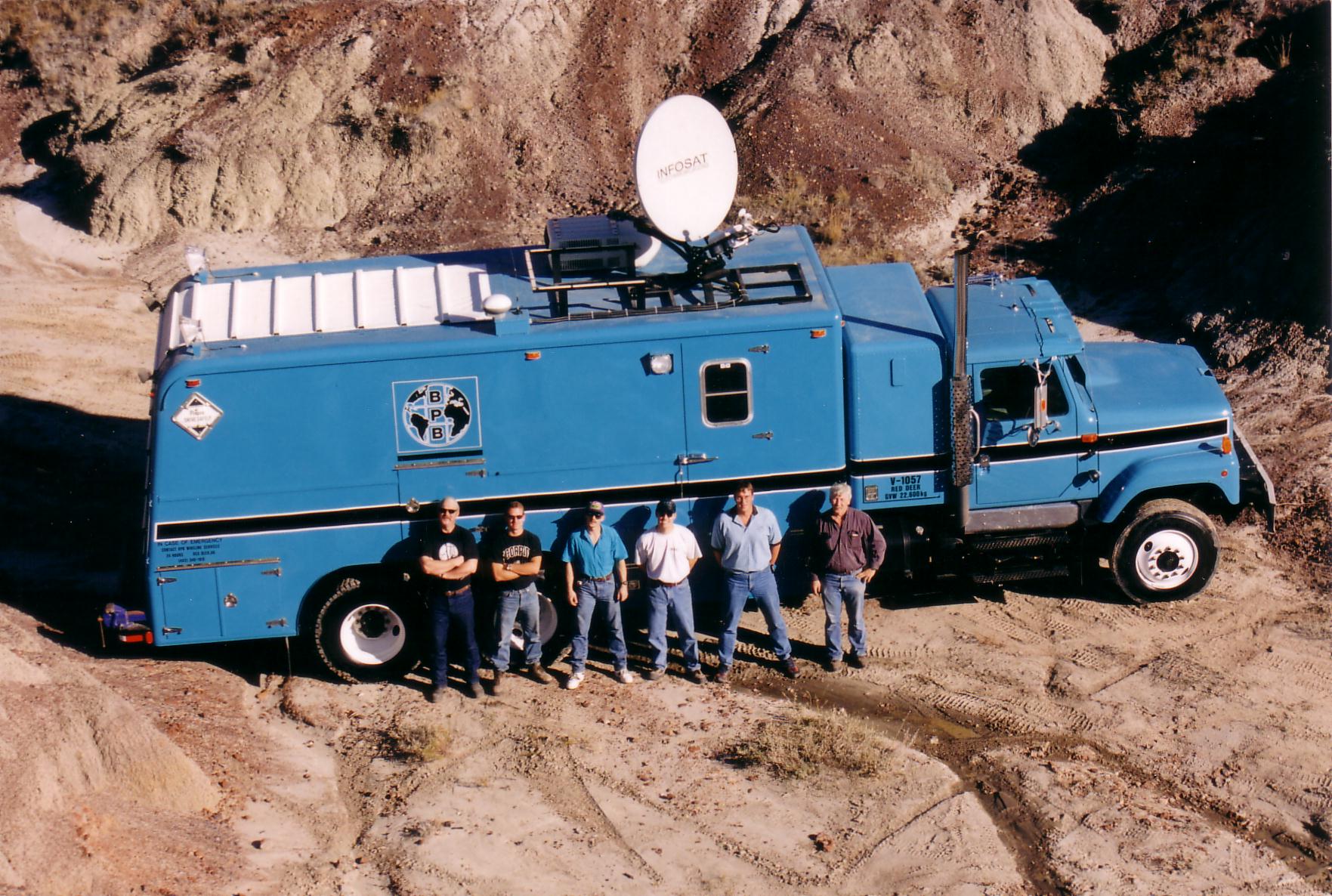
Photographed at the same time as V229, Canada
V1063

Allegheny 17

Allegheny 60

Allegheny 65
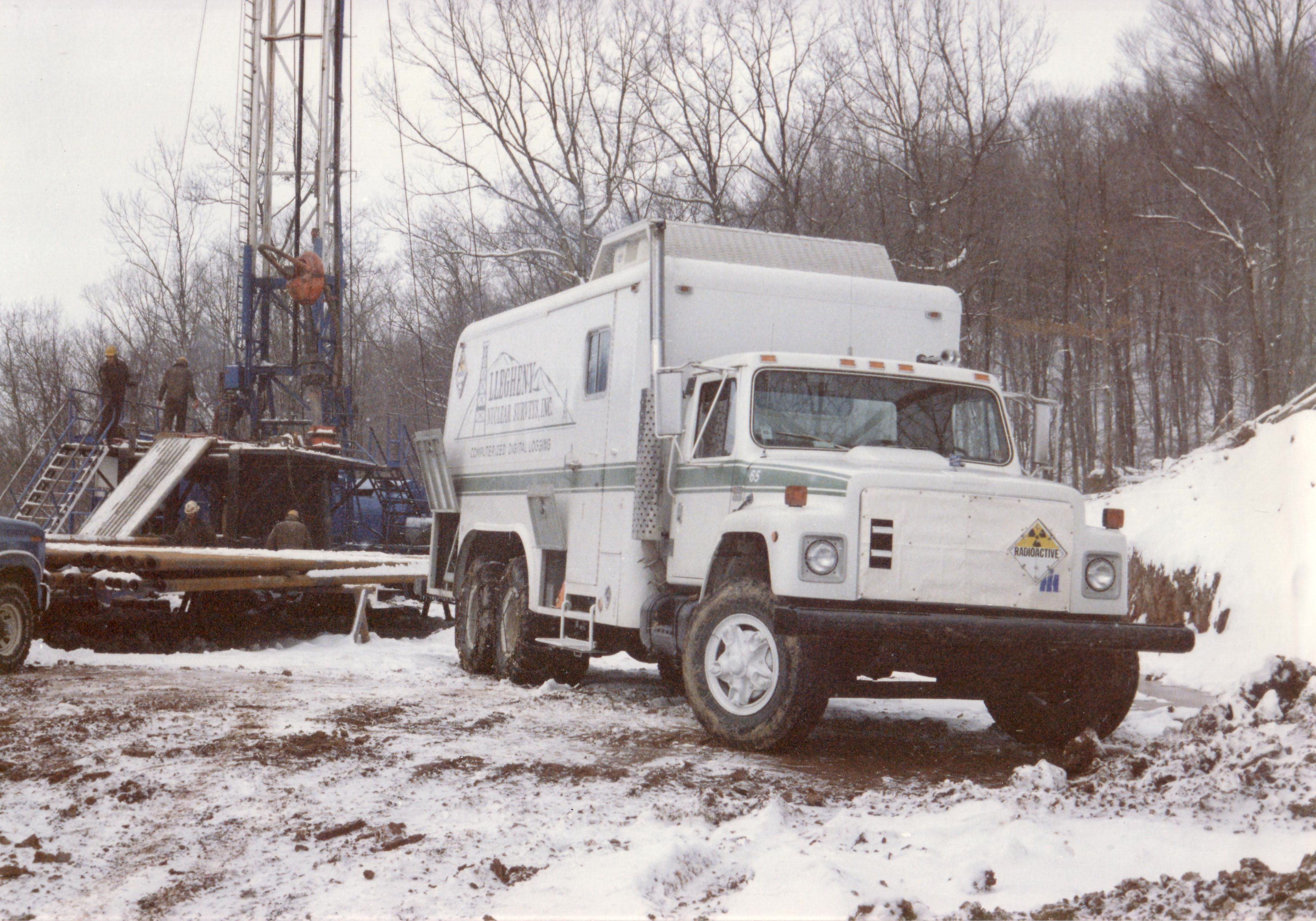
OSU-001
First of the Offshore Service Units, developed 1986
OSU-003
In NLD 1997
OSU-005
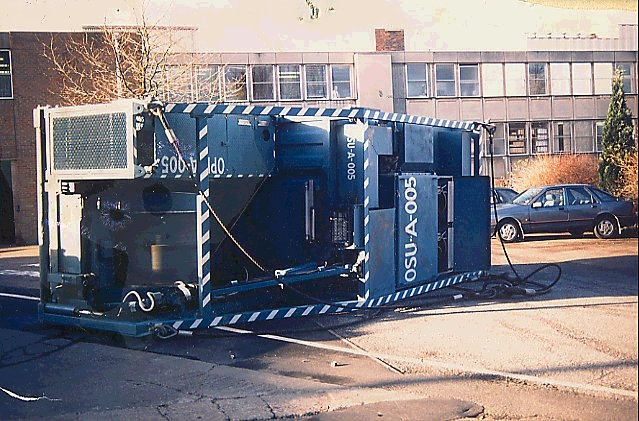
OSU5 was put on the ELK test wells 1997 when OSU6 was returned to ops
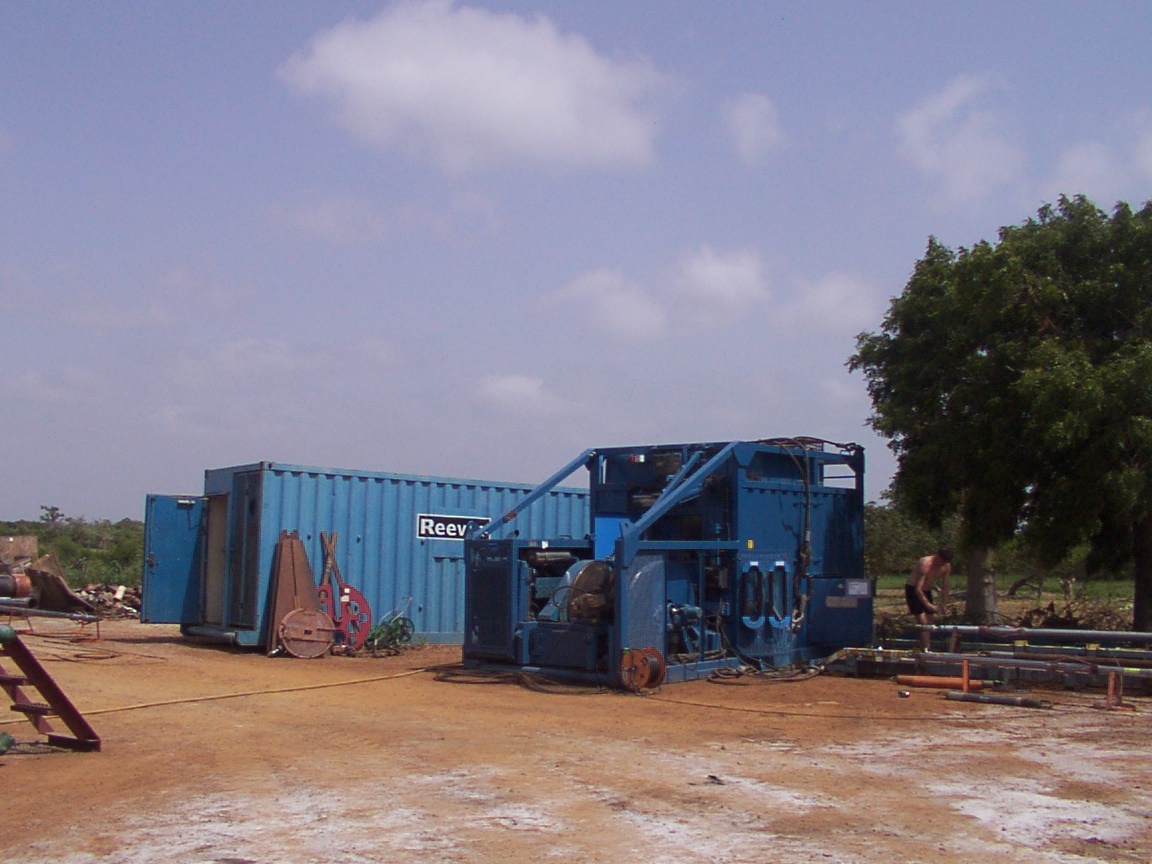
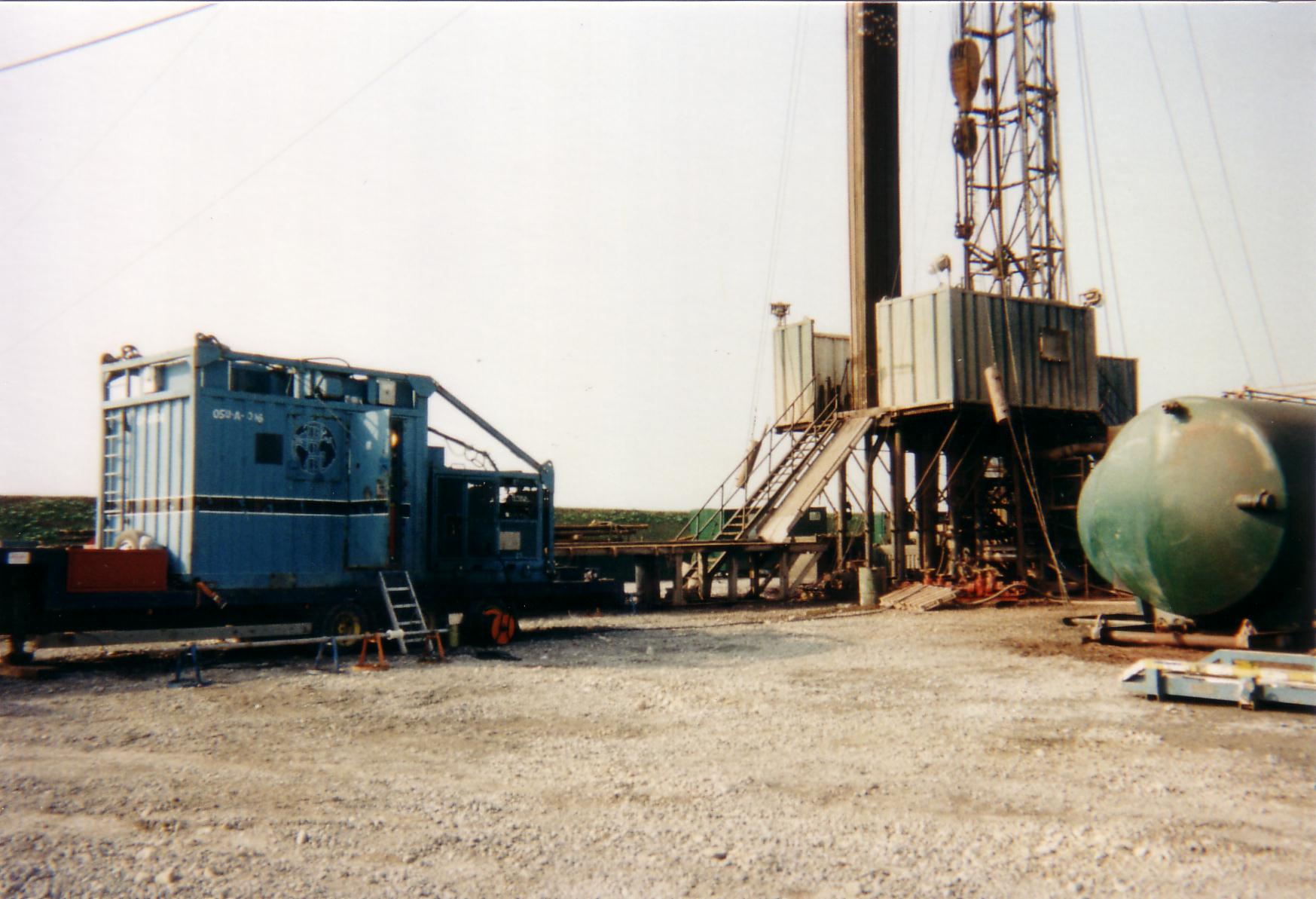
OSU-006

Test well unit then UKL 1997

OSU-007

In Australia ~1988
OSU-008
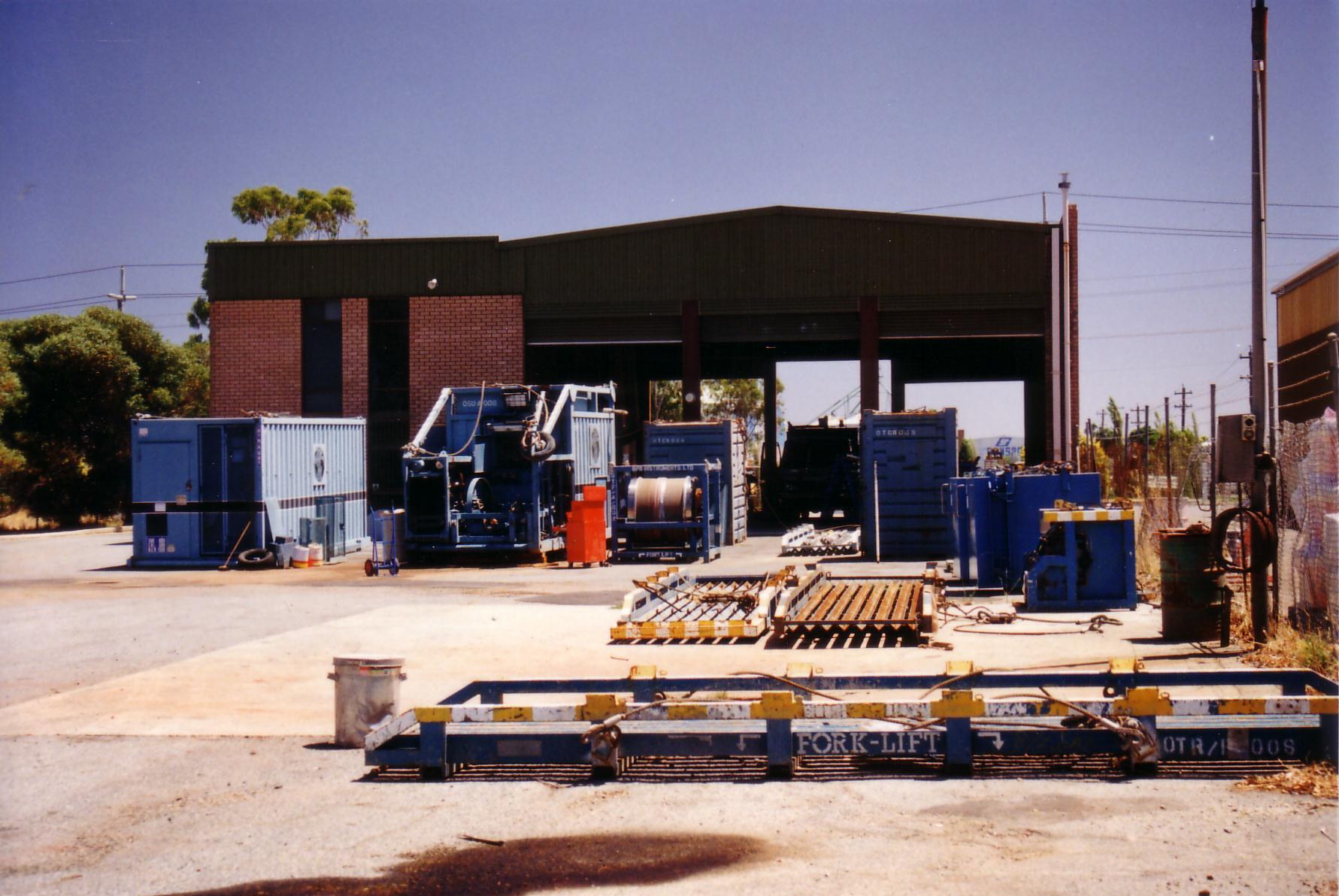
Australia ~1988
Unnumbered
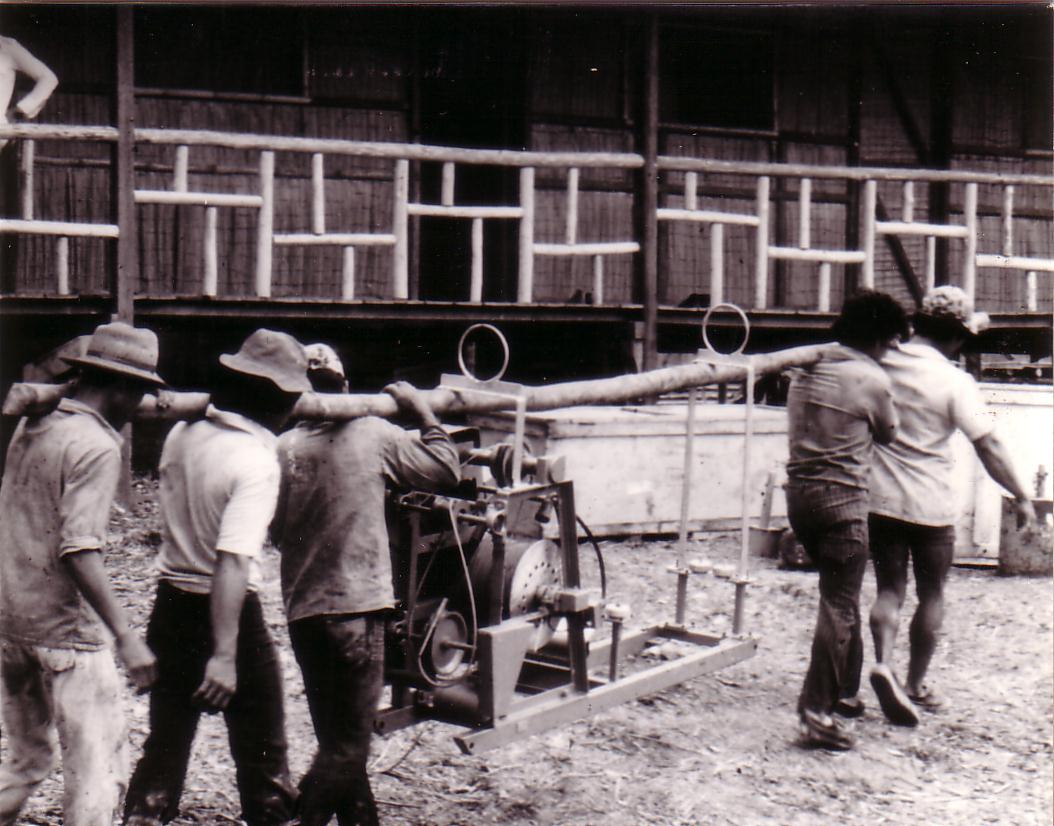
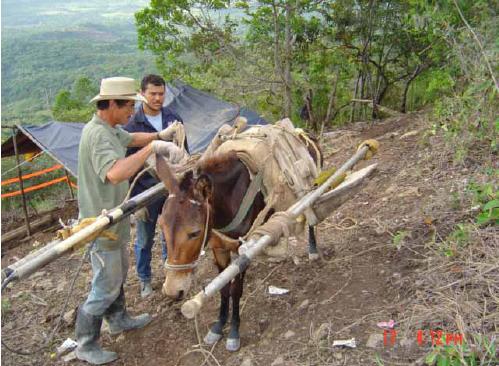
 Neill Gilhooley